


Cracks are bad, m’kay?
This video was brought to my attention today. I’d like you to watch it (it’s only about 8 minutes long) and then read what I have to say…
Back in the day…
When I first began exploring the use of computers to use in the production of music, there wasn’t an awful lot out there. First up, PC’s didn’t exist. The Internet? Wasn’t even thought of. CDs? A few years away. Nope, I think it was pretty safe to say that there wasn’t a lot out there. I had a Commodore 64 and there wasn’t much to choose from, but there were options. One particular choice was a program called Electrosound. I’ve mentioned this before in other posts and it was my first proper sequencer. It allowed you to program and manipulate the C64’s SID chip, allowing you to make very simple, 3-track songs. Each track was monophonic, so judicious use of the 3 part limitations of the chip were necessary, but I still remember coming up with what I thought was a pretty passable version of ‘Stripped’ by Depeche Mode, once. I’d love to hear it back now, but maybe it’s better off in my head.
Electrosound didn’t cost that much, if I recall. But I knew of people who would make copies of C64 cassettes which then did the rounds at school. Software piracy was rife even at this early stage of the game. And try as the industry might, it has remained to this day.
My first encounter with piracy
Sometime in the early 2000s, I wanted some orchestral samples for my Akai S6000. So I searched on eBay, which was now coming into its own and I found a seller offering a DVD with what seemed like a legitimate set of orchestral samples in AKP format. I have a feeling it was one of my first eBay purchases and the advert looked pretty authentic, as I recall. So, I bought them and awaited their arrival. When they showed up, I was slightly puzzled by the blank DVD-R case and then I saw the disc, with its handwritten title and instantly thought I’d been had. I popped the disc in the drive and was surprised to find that the samples were there, as promised. And there was another folder entitled “Try Before You Buy”. I opened it and inside were a number of sub-folders that were marked “Ableton Live”, “Propellerhead Reason”, “Cubase” and various others. So green around the gills was I that I genuinely thought the seller had just added some genuine free trials in and I honestly felt grateful. But it didn’t take long for me to realise what this was, and I have to say, I felt conflicted. On the one hand, this wasn’t legal but on the other, I seemingly now had full versions of some excellent tools. I decided to install them, not knowing the potential risk of infection from cracked software, simply to understand what I had here. Sure enough, these were cracked copies of the aforementioned programs, and I had to laugh at the text file in each folder that said that all software was provided as a “try before you buy” exercise and that should I find myself using any of them, I should buy them. They had even gone as far as designing custom splash screens on the installs, such was their audacity.
I uninstalled them almost immediately. I was equally concerned about breaking the law as I was about running the risk of viruses on my PC. I already owned the latest Cubase (with its eLicenser USB dongle, a welcome relief after the earlier LTP Port Dongle it used to come with!), so really didn’t have much interest in what was on offer. But I became very interested in what else was out there and was simply stunned to discover that pretty much every piece of reputable software was available to download via peer-to-peer sites or even just openly flogged on eBay. It was a definite eye-opener.
As time wore on, I learned more and more about how many people used cracked and copied software. It seemed like an epidemic. I spoke with developers who fought a daily battle to try and eliminate these illegal copies, paying for tools that automated the search for cracked copies (at a price) and heard stories about how much money they had lost and what that meant to their bottom line.
Curtiss King vs Image-Line Software

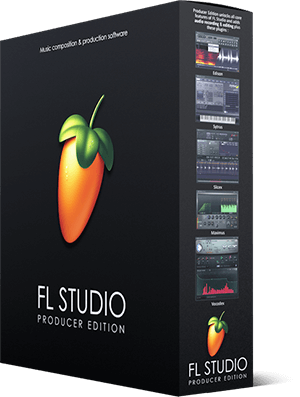
So when I saw this video, I felt compelled to share it and comment on it. I don’t know who Curtiss King is. He works in a genre that isn’t that too appealing to me as a musician, despite my love of a lot of hip hop, so I have no interest in making beats in FL Studio., ergo, I wasn’t aware of his existence. He seems like a really fun and nice guy though, and he’s got a pretty good rep. But what I WAS interested in was how he came to realise the error of his ways. Now, it does seem, at first glance, like he is only doing this because he got caught. Had Image Line not contacted him, would he have continued to use cracked software? Some have suggested he only made this video at the behest of Image-Line Software. That’s also a valid assumption, I suppose. I wasn’t particularly enamoured by him referring to the people that contacted him as “the Image-Line mafia”, simply because they did their job, used public records and traced him to confront him. Maybe that’s just a turn of phrase and I’m not so down with the kids as I once was (?). And reading the comments under the video, it would seem that his message is largely falling on deaf ears. One man and one company is not about to change an entire culture of entitlement.
The bottom line
Credit where credit is due, though. I applaud Curtiss’ effort to address the issue and hold up his hands, whether he had a proverbial gun held to his back or not. It takes courage to admit when you are wrong, and even more courage to try and shine a light on the wider problem. I, for one, think he has done a very good thing.
I am fed up of people saying that software companies can afford to cover such losses, or that perennial claim that, “How else am I gonna make my music, man??”. When I was a teenager desperate to make music we didn’t have the luxury of computers, let alone BitTorrent sites on which to download a bunch of pirated tools. And nowadays, there is a wealth of legitimately free or super-low-cost software tools and applications that will allow you to explore your creativity. There are free sequencers, free DAWs, free instrument and FX plugins and a vast array of sites and forums full of people willing to help you find them and learn how to use them. There is literally NO excuse to pirate music software these days. So, I’m sorry, that argument no longer stands up.
Chances are, if you don’t share your screens on YouTube for all to see, you will probably continue to fly under the radar, but as Curtiss points out, if you steal this software so you can use it to put food on the table, you had better fully understand that the food you put on your table has been stolen from the table of the developer. And that developer is not a faceless organisation. He is a regular guy, with a basic salary and just the same bills to pay. I know plenty of these guys and not a single one of them drives a Ferrari, nor wears designer clothes or lives in an 18 bedroom mansion.
Take pride in your creativity, not just for its artistic merits, but because it is built on a foundation of collaboration, support and fair play.


Leave a Reply