


The ‘X’ Factor
Blimey.
Time marches on. Here we are and it’ll be March next week. It’s the one thing, other than slowly declining health, that bothers me about getting older. Time seems to move faster and faster.
Anyhooo…. enough of the mithering. I thought I’d bring you up to speed on my ongoing obsession with all things in the Yamaha ‘X’ family. A few things have happened since I last posted about it all and I think I ‘may’ be at a point where I can take a pause and allow my bank account to recover a bit!
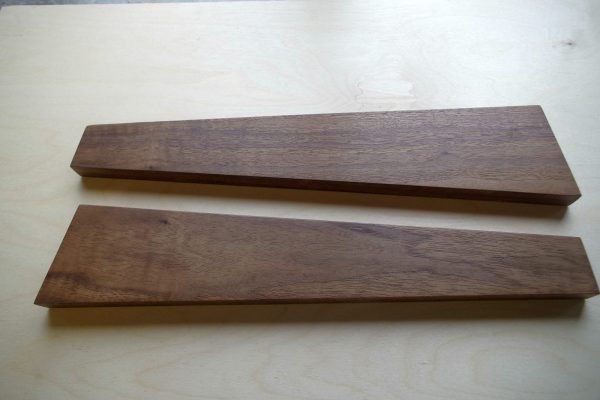
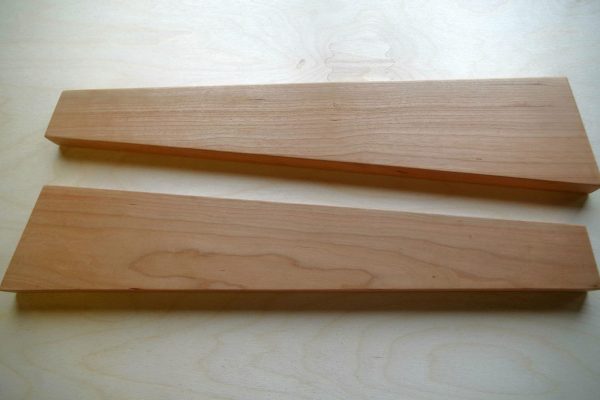
So, when last we spoke on matters DX, I had just fitted some new wooden end cheeks to the DX5. What I didn’t mention back then was that in my haste to fit them, I had forgotten to adjust the torque setting on my power screwdriver and over tightened one screw and slightly spilt the wood! Now, to look at it, you wouldn’t know, but I know it’s there, and that is enough to unsettle me. So I contacted the guy who had made them, told him what a klutz I had been and asked him if he had any more. He said he didn’t but would be making some more soon, which he has now done. The only thing is that they were two completely different types of wood to the Opepe he had used on the first set which, in my eyes, really suited the synth because they were very similar in colour to the Brazilian rosewood used on the DX1. These new cheeks were made from American Cherry wood and American Walnut. And I just couldn’t decide!! So I bought both! And I still can’t make my mind up!
Anyway, in other DX5 news, I was finally able to track down the missing Factory cartridges! When I bought it, it came with one of the two ROM carts, a DX7 voice cart and a RAM cart. The DX1/DX5 ROM carts contain two banks of 32 patches. The first 32 are the internal Factory patches and the second set are supplemental patches, primarily used by the Performance Factory presets. Because the DX1/DX5 had twin 6-Op engines, Yamaha exploited the natural chorusing and richness provided by playing two similar patches together, mostly with a smidge of detune on both to get a really rich and satisfying sound that, even without external FX, sounds much more satisfying than, say, a DX7 on its own. So Yamaha pre-programmed the Performance section of the DX1/DX5 with 64 patches that virtually all took advantage of this feature. On those patches that didn’t, they were mostly using the split keyboard capability. The first 32 Performance patches use the 2x 32 internal patches and the second 32 use those on the second half of the ROM carts. So, with me missing one of those, utilising the Factory Performances was a real pain of transmitting the Sysex banks to the synth, then saving out to the RAM cart.
Having set up a bunch of auto-searches on the likes of eBay and Reverb, I wasn’t getting any catches and so, when a pair of old, third party 64 slot RAM carts appeared for sale on Reverb, I snapped them up, only to find out when they arrived that they had been ‘locked’ using an early DX7 feature that enabled the user to secure the contents using a simple code. The only way to rectify this is to completely wipe the cartridge using an early version of the DX7 Mk.I. So, I am off to my friend in London in a few weeks to do this. However, shortly after they arrived, completely out of the blue, a seller on eBay listed the exact carts I was missing! I made a cheeky offer, expecting to barter a bit, but my initial offer was accepted and they arrived the next day and further completed my DX5 experience!

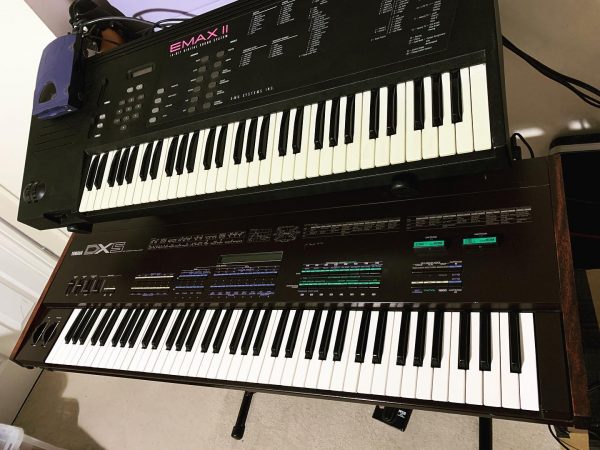
So now the ‘X’ collection contained a DX5, TX7, QX5 and RX17, along with a selection of ROM & RAM carts and a BC-1 Breath Controller. But I still had itches I wanted to scratch, mostly revolving around the 4-Op variants within the range.
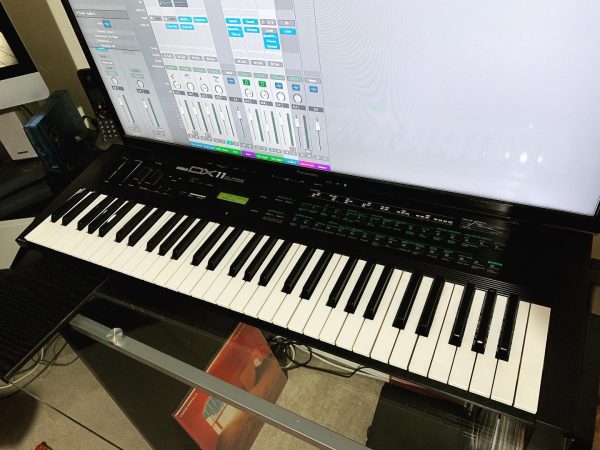
Yamaha made more 4-Op (and 2-Op, for that matter) instruments than they did 6-Op. Which I’ve always found a little odd, but considering the sales numbers of the DX7, maybe it isn’t that surprising. Some of the 4-Op family are known duds. The DX9, for example, came in a DX7 size case but lacked the sonic punch and, oddly, a number of patch memory slots. The DX27/27S/100 units all used the same engine in different cases and sizes, with the DX27S adding stereo speakers and a chorus effect, and the DX100 offering a mini-key experience and lug nuts for a guitar strap. Sonically though, they were barely any better than the DX9 but did have considerably more onboard patch memory. Finally, the DX21 and DX11 actually raised the 4-Op game and delivered some worthy enhancements. The DX21 added a chorus, but most importantly a splits and layers function and a Performance mode. The DX11 was the best 4-Op synth of the era, based as it was on the engine found in the TX81Z module. The DX11 sported Performances, splits and layers, as well as multitimbrality and a set of FX that, whilst not a full blown FX engine, used clever voice manipulation or MIDI functionality. For example, the ‘Reverb’ is nothing more than the DX11 increasing the release time on the patch. The ‘Chorus’ is merely stacking and detuning similar or identical patches and the ‘Delay’ is just a MIDI delay. All of these can also eat into the meagre 8 voice polyphony, but all things considered, the DX11 is a mighty fine sounding synth.
So when a mint example came up for sale last week from a friend of mine, I couldn’t help myself and swiftly added it to my collection.
But no sooner had that settled in and acclimatised, I received a message from another friend who had a CX5M Music Computer for sale! Within a couple of days, we had agreed a deal and this morning, he brought it over to me where we tested it out and money changed hands!

I’ve been looking for a reasonably priced CX5M for a while now, but most examples were either ridiculously priced, missing parts or sporting the early SFG-01 Synthesizer module. This version was akin to the DX9 and unable to respond to MIDI In from anything other than a DX7. The SFG-05 removes this restriction and delivers a synth that is comparable to the DX21 and has a much improved UI. This system also came with a copy of Digital Music System’s DMS1 Real Time recorder, which sounds an interesting beast!
So I really think I should slow down the acquisitions for now, despite me being offered a DX100 recently. Although, knowing me, my resistance won’t last long!
Oh, and in case you were wondering if I had fallen out of love and neglected my first true love, the Fairlight, in the last few weeks, we have acquired two more Series III systems for restoration, one of which is an incredibly well specified Rev.9 model, with multiple hard drives and tape drives and a huge box full of 8″ floppies and data cassettes.
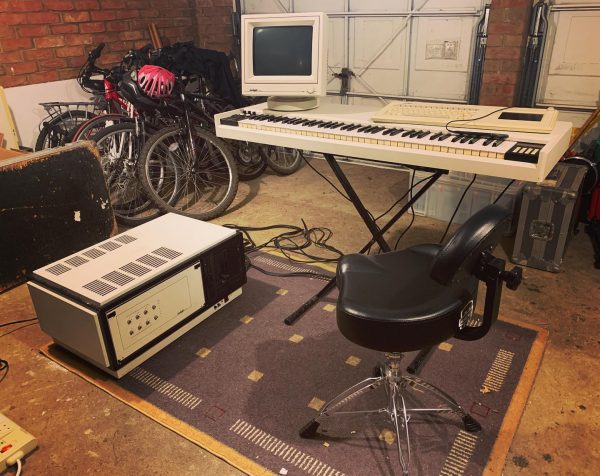
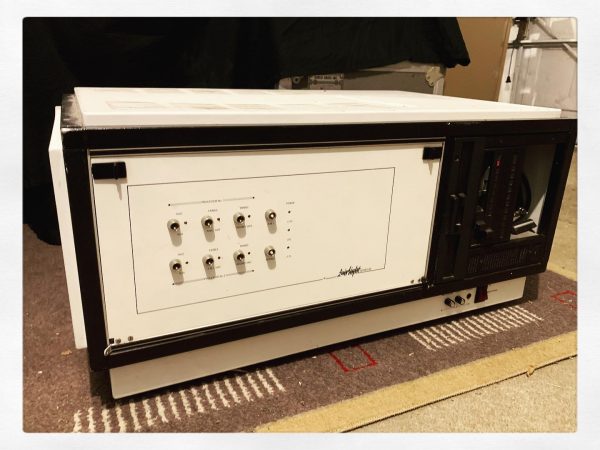
So, plenty of work to do on that front too.
And all of this ‘X’ family acquisition is all (hopefully) leading to something that may well take most of the year to complete, but I hope it will be worth the wait. Watch this space!
More anon…


Leave a Reply