


Synth Sleuthing
The DX7 Sound That Wasn’t
I do love a good studio “fly-on-the wall” video and they don’t come much better than this. Seeing Queen’s working process, the dynamic between the members, Freddie’s relentless pursuit of perfection and the fun they had doing what they did is pretty inspiring.
One thing that often bothers synth-heads like me is the part where we see Brian playing the string part that features in the intro and middle eight on a DX7. As is the way on the internet, this has sparked a number of debates about how to recreate that on a DX7 and how many people have tried and failed. But there are a few clues in the video that led me to believe that this was never a DX7. So last night, I decided to investigate…

The Clues
Firstly, this is actual footage of a session, not a staged effort as so many music videos of the day were. This was a 2 week session and it was all filmed and then the footage was edited to create the promo. So we know that this is an accurate document of what went down.
Secondly, we need to identify what instrumentation was available in the studio. Synth wise, there is Queen’s infamous Fairlight, a Series I upgraded to a Series II and the only one of that kind to feature a hard disk drive before Fairlight installed them as standard on the Series III. Throughout the video, the CMI is never used, or switched on. In fact, at times, parts of it are often missing, moved to someplace else in the room. It suggests to me that the CMI wasn’t used on this track.
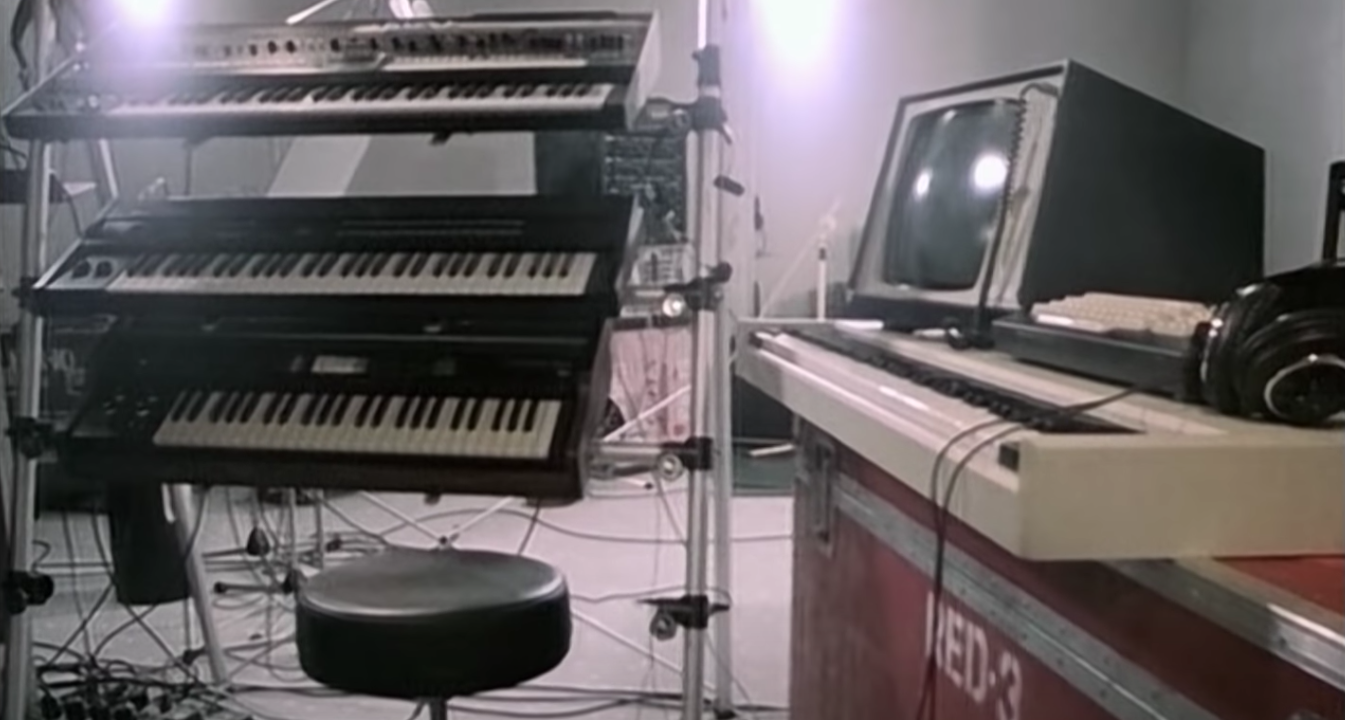
Next up we have a 3-tier stand that houses a Jupiter 8, a DX7 and what looks like a Roland VP330. Again, these never appear to be on and are never used in the footage.
Then there is another DX7 resting against a wall, which is likely to be the one we see Brian use in the clip. In that section, the only cable connected to the DX7 besides the power is a MIDI cable. The audio outputs are not connected, so any suggestion that these famous strings are from the DX7 has to be wrong.
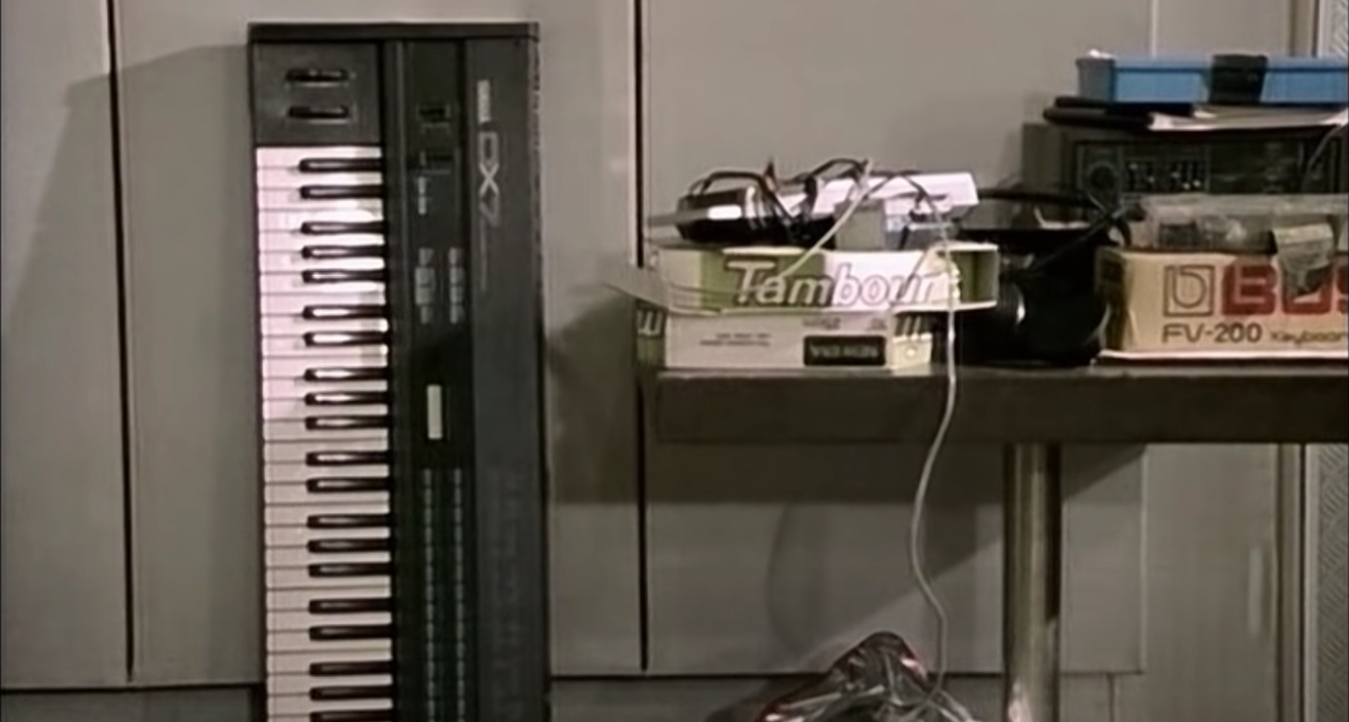
Trying to scour the outboard racks behind the desk is tough, given the quality of the video and the amount of time and movement of the camera in those shots that feature it. Repeated viewings, pausing the video wherever possible, yielded nothing of any note. To be honest, in late 1985, there weren’t many rack-mounted synth modules around, so I am guessing that this wall is almost all FX and audio processing/routing gear.

So what was Brian triggering, besides a host of synth-heads on the internet some 30 years later?
The Breakthrough
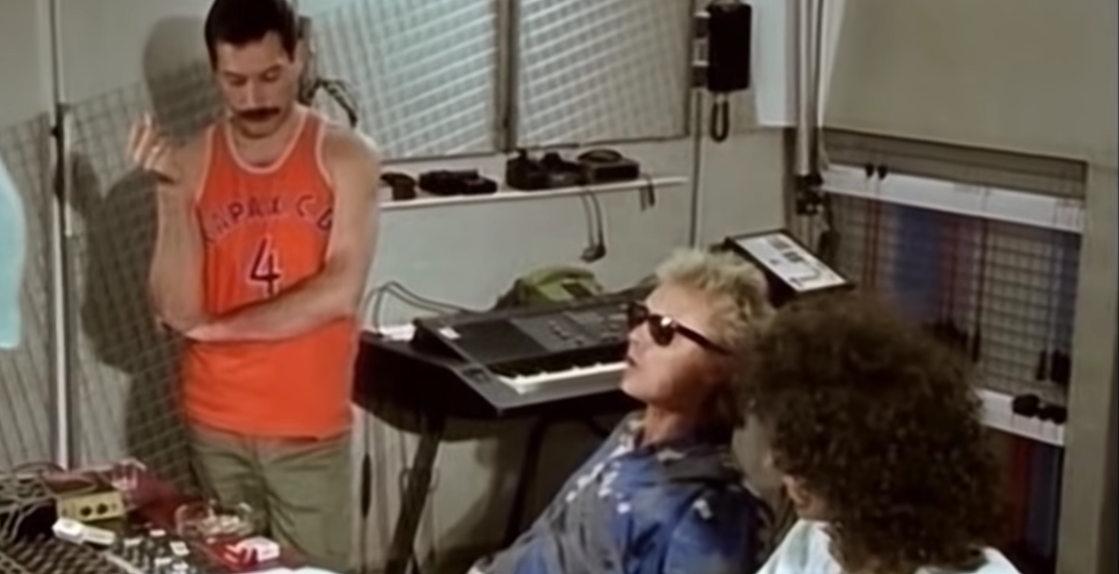
Well, on closer inspection of the video, there is a Kurzweil K250 sat in the corner of the control room. We mostly see it’s fairly unique and easily identifiable UI when John is noodling in the corner, but later in the video, as Freddie, Roger and Brian struggle with some of the lyrics, it is clearly seen. And so, in the absence of any other visual evidence, my attention turned to the library of that machine, which I have here on a couple of instruments. It didn’t take me long to scour the orchestral patches and find one called Bowed Strings Fast that, when I played it dry was, to my ears anyway, an almost exact match to what we hear in the video.
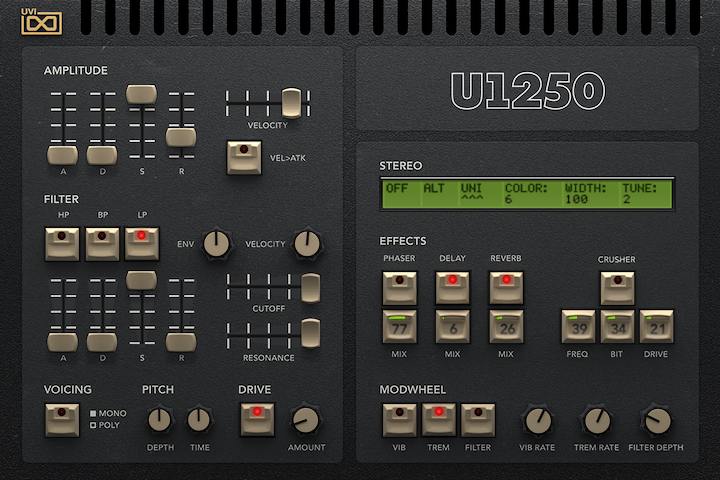
I recreated the part in my DAW, played it through one of my plugins that had the Kurz’ library and I was convinced. I also had help from Liam Fretwell, who has a Kurzweil K2500 that features the same samples and he was pretty convinced too.
It’s of no real consequence and completely unimportant, but it was actually quite satisfying to “solve” this mystery. I am sure someone else has discovered this, but I still feel quite chuffed!
I suppose that the important factor in this investigation is the availability of an accurate visual document, something we desperately, but understandably, lack. To see the inner workings of musicians in a studio is a privileged experience.
Anyway, enjoy this 20+ minute insight into the studio workings of one of the greatest bands of all time…


Leave a Reply