


The Story of SARARR
One of the most iconic and recognisable Fairlight sounds…
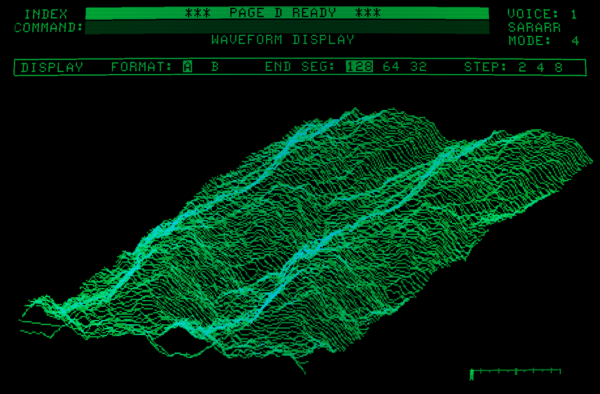
The Fairlight CMI was one of the most ground-breaking and important electronic musical instruments of all time. It ushered in the concepts of sampling and on-screen sequencing and is, in my very humble opinion, ground zero for the way we make music with computers today.
In the early days of sampling, you either used the factory sounds or made your own. Sample libraries as we know them today didn’t exist back then, at least not until the mid-1980s, so the guys in the Fairlight office tried their best to supply their new machines with a decent amount of content to get on with.
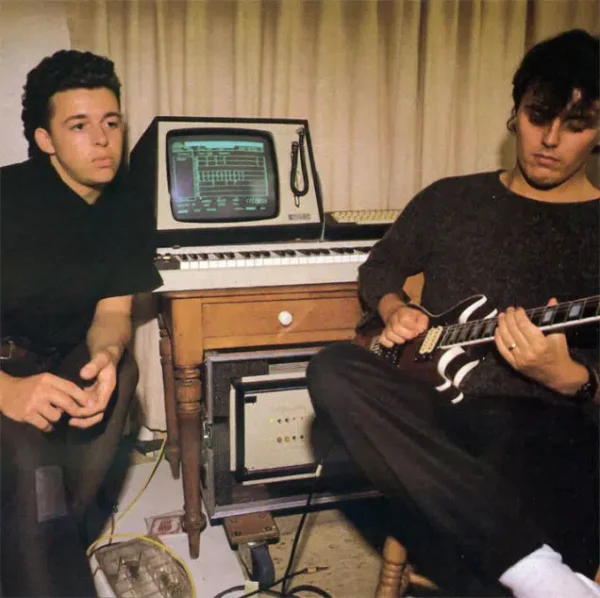
This meant that when some of those sounds piqued interest with one owner, it likely piqued the interest of all. And the breathy sample called SARARR, which was also known as ARR1 on some versions of the factory library, was one such sound. It found its way into so many tracks that used a CMI, along with the Stravinsky orchestra stab known as either ORCH2 or ORCH5, again depending on which version of the library you had.
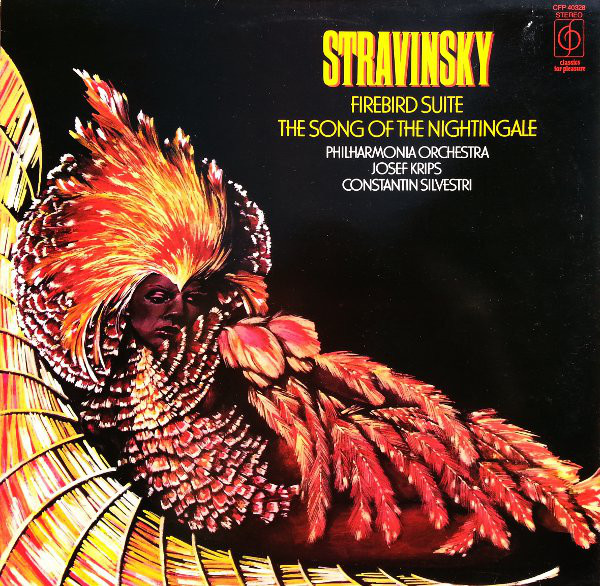
That orchestra stab was sampled by David Vorhaus, whilst staying at Peter Vogel’s home. Peter was in the office and David had woken up around midday, deciding to mess around with Peter’s new toy. Already predisposed to the works of Stravinsky, David spied a rendition of The Firebird Suite in Peter’s record collection. He connected the turntable up to the CMI, dropped the needle, hit sample and one of the most iconic sounds in music history was born.
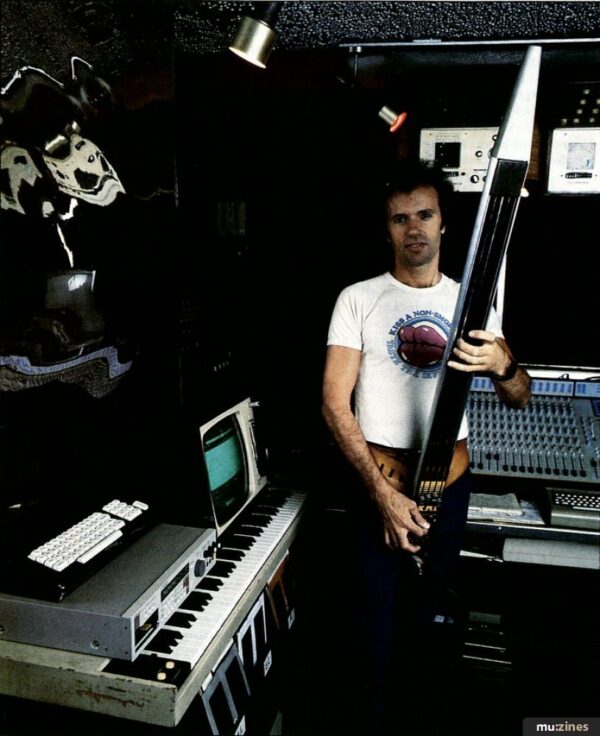
Similarly, the creation of SARARR is equally unique and serendipitous. And who better to tell this story than the man who created it, Tom Stewart. But of course, we must not overlook the source of the sample, a certain Sarah Cohen. Tom takes over the story…
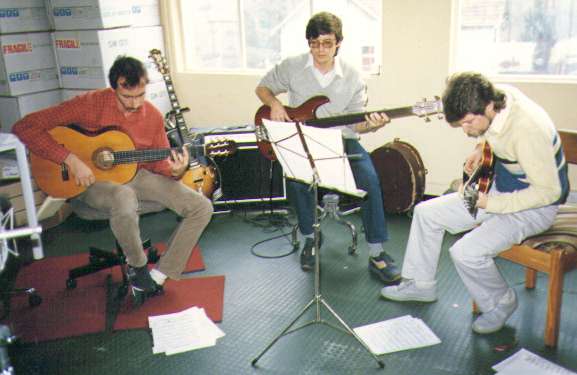
Image courtesy of Peter Vogel.
(Published with the kind permission of Tom Stewart.
https://archive.fo/ZvWet#selection-439.0-606.1
This is a transcript of a post that Tom made on the now-defunkt Peter Vogel Instruments forum, which has been archived here… https://archive.fo/ZvWet#selection-439.0-606.1
I wanted to preserve and share this story so need to be clear that this story is Tom’s words, verbatim, and I am merely sharing it here for the benefit of all.)
The vocal sound sample “ARR1.VC” was included in the CMI Sound Libraries. There have been some queries and theories about how it was made so here’s the story.
Background
In 1980, I was a poor jazz music student at the Sydney Conservatorium of Music. Dr. Martin Wesley-Smith was the head of Electronic Music there and had one of the early model Fairlight Series I CMIs. A man of great foresight and trust, he gave me carte blanche access to this amazing technology. It was fully kitted out in a small studio with a mixing desk, 8-track reel tape and a 2-track mastering reel tape. I spent all spare time exploring and creating music on this fantastic instrument (to the detriment of all other courses). Having a background in recording studio work and electronics also helped to get the best out of the CMI sampler e.g., signal-to-noise, sample rate, tuning, filtering etc.
I had done various samples of myself but these were pretty average sounding. At the time, a friend of a friend Sarah was a bluesy singer with a unique husky voice. Sort of like Lou Rhodes/Alicia Keys/Janis Joplin and perfect for sampling.
Prerequisites
The easiest thing would have been to record Sarah to tape and later on do the sampling, in a more controlled way. But tapes always seemed to suck the life out of sound – the electronics in and out, the stretching/demagnetising of the tape, dirty heads, noise floor etc. To get the optimal quality required the shortest path between the voice and the analog/digital convertor and the best microphone possible, connected directly into the CMI microphone input.
Equipment
- CMI Series I
- Sennheiser dynamic cardioid balanced studio microphone
- Guitar tuner with inbuilt mike
- Calculator
- The voice – Sarah
Sampling setup
I was trying to get the sound of angels singing and wanted Sarah to sing more and more airy or breathy (as angels do). Some of this high-end ‘air’ was deliberately over-emphasised to compensate for the limited sampling bandwidth.
This was achieved by keeping the voice unchanged while varying the vocal tract so that the air component would be louder and more in-tune, or resonant, with the voice component (analogous to a low-pass audio filter being peaked just before the cut-off frequency). Microphone positioning was best when directly close-miked at around 40cms distance, capturing a balance of low voice and air.
Sarah would sing a note for several seconds while watching the guitar tuner to stay on pitch. I would sample midway through the note. It turned out that she didn’t actually need the tuner because she had perfect pitch.
The sample rate was a compromise between a long sample (low sample rate) and adequate high-end frequency. A sample rate around 8Khz yielded around 2 seconds of sample time which was long enough to reduce noticeable looping and thus playable over more of the keyboard. The Page 8 high filter was set by ear to minimize digital aliasing grunge.
Volume level was set to just under clipping to maximize the 8-bit signal-to-noise ratio. We settled on very, very, smooth and airy notes to sample – no vibrato or tremolo. I think it was low C or D sample notes when my neck hairs stood up.
Looping
Getting the waveform loop smooth was perhaps the hardest part of all because the sampling was done live i.e., never the same waveform twice. Loop start and loop length were assigned on Page 7 to 2 controllers on the music keyboard. Each time Sarah was sampled, the waveform was then manually looped to eliminate the dreaded loop click.
Some samples will never loop. If I couldn’t get the loop exactly right within a minute after sampling then it was discarded and a new sample started.
The ARR1 sample
After a few hours in the non-air-conditioned studio we must have re-sampled 100 times before finally capturing The Perfect Sample/Loop. It sounded fantastic. Sarah was a little hoarse by then (resulting in a better sound perhaps) but still cheerful.
Later on I recorded ARR1 to 8-track as 64 voices spread micro-tonally over an octave – 1200 cents. It was a very thick wall of sound with no discernible pitch.
The first time that ARR1 appeared commercially was on the Fairlight demo tape. This was a collection of CMI musical excerpts from musicians around the world. I was privileged to have my song included here ==>
CMI SII A (18MB) CMI Series II Demonstration Tape Side A – Starts at 09m45s –>10m15s. Despite the label saying CMI Series II it really is Series 1 from 1980.
Artifacts
Any sampling can introduce artifacts that are to be avoided or minimized.
The loop click artifact was very easily caused by the most minute change in volume or pitch, non-zero crossing at the loop points or incorrect sample rate. It was possible with the light-pen to manually redraw the waveform but the CMI had 128 fixed loop points, no pitch detection, sample rate conversion or waveform rotation.
The audio op-amps were the best available then (1980) but average by todays standards in terms of s/n ratio, slew rate. The sample high-filter only had settings from 1 to 8 and I’m not sure how steep (24db??) so minor aliasing artifacts could have been present.
To further complicate things, the Series I voice card filters were digital PCM switched-resistance. Certain combinations of sample replay and the filter settings could produce the “B flat birdies” (heterodyning?), a high-pitched buzz.
The Fairlight sound
The CMI voice channels were implemented entirely in hardware in discrete cards. There was no latency, processing overhead or buffering that would delay the sound or processing. I think the voice cards had extra hardware to interpolate levels from one byte of the waveform to the next to improve the 8-bit sound. Each voice channel sounded slightly different, probably due to the final analog stage of the cards. The Fairlight design and components were of the highest quality available at the time, a measure of the technology and effort put into it.
I must mention that the CMI page-based software had a logical layout (and command line) that was consistent and intuitive to use. As a musician/composer this intensified the creative process.
Postscript
- I went on to join Fairlight for 7 years as the sound librarian, demonstrator, instructor, software tester, Help pages etc.
- The ARR1 sound went viral. Other manufacturers blatantly used it in their products.
- Page R appeared and changed music.
- The Series III was released and marked the beginning of the totally digital studio.
- Series I/II/IIx samples were converted to Series III 16-bit format. We thought that 8-bit samples would sound a bit naff on a Series III but they were surprisingly good.
Tom Stewart – February 12th 2012.


Really interesting – speaking from a user pov. Had no idea how the sound was created – just knew it was a killer sample
How do I contact Tom ?
Hi Greg, I got your email and have forwarded it on 🙂
The Ghost in you version of this sound was made in a small motel on the outskirts of Lismore NSW after a particularly awful Furs gig. Some of us went off with a man who claimed to be a chemist and decided to trust him enough to eat his medicine. Back at the hotel as it started to work we ended up in my room . 12 of us…all grounded round the fairlight. It was a fiddle on page 6 on the first few segments that added the whistle at the front. Keith forsey loved the sound but forced me use page R