


2019 Retrospective
And here we are again. Another year and another decade draws to a close and we, as a species, seem predisposed to reminisce and review our antics, as if conforming to the human construct that is the Gregorian calendar and believing that the end of a year, decade or century has any actual meaning. I’ve never understood that. “This year is going to be GREAT!”, some will proclaim. “Goodbye old year, hello new!”
Time has no opinion, no formality and certainly no routine. It is a contiguous, uninterruptible path that we simply have no choice but to follow and we seem to think that breaking it down into repeatable and manageable chunks gives us some kind of control over it.
Why is it so scary to have absolutely no control? I have no idea why a significant section of our insignificant species cannot free their minds enough to realise we are spinning uncontrollably through space and time and there’s not a damn thing we can do about the utter inevitability that we are insignificant in the eyes of the universe.
But hey, that’s no fun, is it!?
And so, in an act of servile conformity, I feel compelled to review my actions this year, explain the numerous ups and downs and where it all might lead when we decide to add one to the number of years we use to track our passage through the universe.
2019 has been a pretty unique year and one that has rounded off the decade in a pretty positive manner. It started slowly and with little indication of where things were to go, but by June, seeds were being sown that would grow into something quite promising by year end.
January saw me receiving an as yet unreleased new synthesizer, the Behringer MS-101 (as it was known then, before it dropped the 01). Shortly after, and with the generous loan of a Roland SH-101, I was able to record what has been, laughably, my most successful YouTube video to date. at the time of writing, it’s had over 67K views, which I know is far from YouTube Star status, but was rewarding anyway.
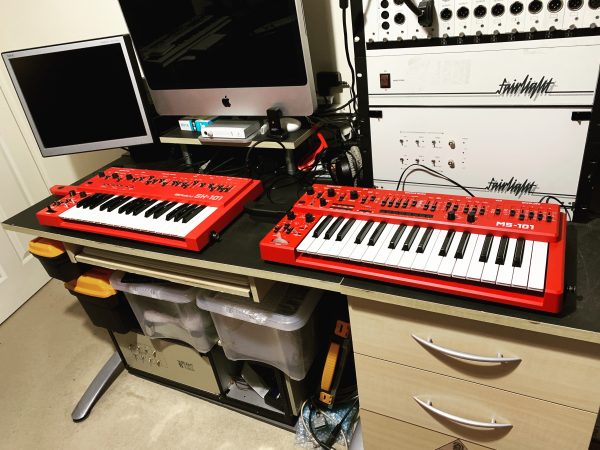
Over 500 comments, mostly good, with the exception of a handful of arseholes, and a tiny bit of revenue generated. A yacht and Ferrari are still not in my immediate future.
One thing it did prove to me is that I am not of the YouTube generation. I am not a slave to likes and views. I really don’t yearn for the adoration and adulation of my peers as so many synth-related YouTubers seem to be so desperate for. My style is clearly not in tune with the average YouTube viewer, whose attention span and IQ are pretty closely matched in seconds. I talk too much, so I am told. I don’t have quirky camera angles or some kind of catchy “thing” that makes me stand out. And, quite frankly, having interacted with a selection of that clique that got invited to the Thomann event earlier this year, I’m more than happy NOT to stand out. I spent a large chunk of 2019 trying to think of how I could break through into that world and by December I realised that a) I probably couldn’t and, more importantly, b) I really didn’t want to. That doesn’t mean I won’t do anymore YouTube videos, but it sure as hell DOES mean that I won’t be doing that whole millennial schtick just to get a ton of likes and shares and that all-important ad revenue. Sorry to disappoint.
In April, I lost my father. No words could express my loss and so I will leave it at that. Later that month, I would lose another friend and a man without whom I might not be where I am today, Mike McGrath. Both these wonderful men had big impacts on my life in different ways, and they are both sorely missed.
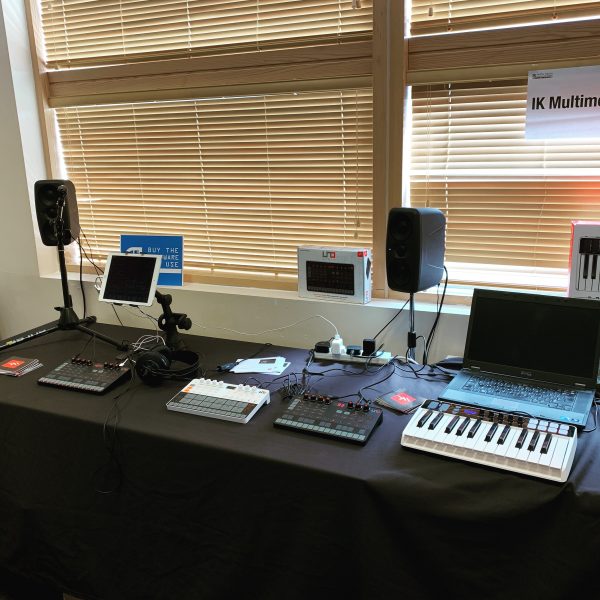
May saw me working with the lovely people at IK Multimedia again, presenting the newly released UNO Drum at Imsta Festa in London, along with their utterly amazing iLoud MTM monitors. 2019 saw my relationship with that company solidify and 2020 sees little let up in that department. I hope to meet many of you at various events in 2020.
In June, I was delighted and honoured to be asked back to ‘Synthesized’, the annual synth meet held at the wonderful Centre for Computing History in Cambridge, U.K.. Once again, I took along a Series III Fairlight CMI to show and demonstrate, but expanded my display with the IK Multimedia UNO Synth and UNO Drum, the Behringer MS-101 and my beloved Korg Prophecy. I had hoped to do a tabletop synth thing, but it didn’t really go to plan, but the CMI was the usual draw that it is, and I even had the delightful honour of being visited by Paul Schlusser, who had come all the way from Australia and was the development manager at Fairlight for the Series III! We spoke for hours and it was a real honour to hear all of his stories.
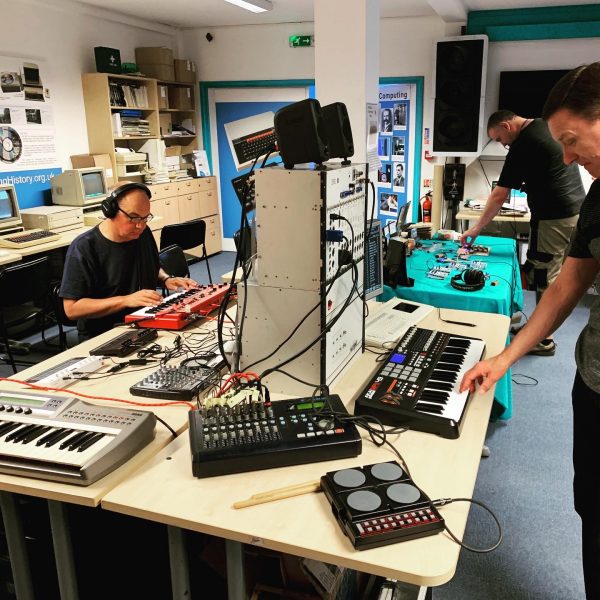
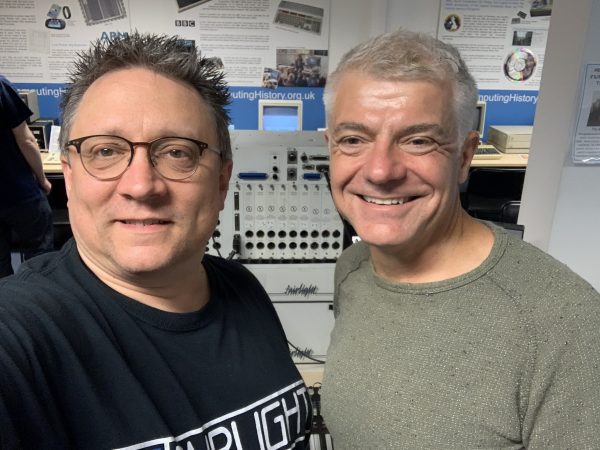
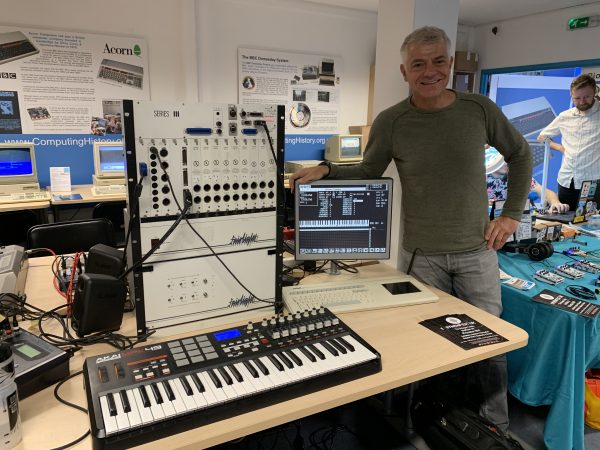
And it was this show that would be the spark that lit a flame that well and truly defined the last quarter of the year, which will hopefully continue well into 2020 and beyond.
July saw me acquire some superb bits of hardware, such as Modal’s brilliant SKULPT and CraftSynth 2.0 as well as taking a trip to Brighton to acquire an E-MU Systems Emax II keyboard! That particular acquisition was a bit of a box ticker. I’ve always longed for an E-MU keyboard sampler, mostly an Emulator II, but the Emax II was too good an opportunity to pass up and, for a very reasonable price, I was now able to wade through tons of classic E-MU sample libraries using a genuine E-MU machine. I also acquired an Akai S2000 from a very good friend who wanted to find it a good home!
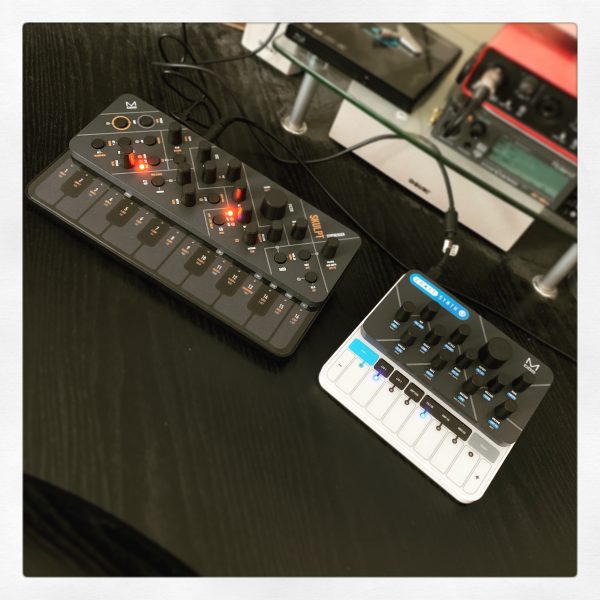
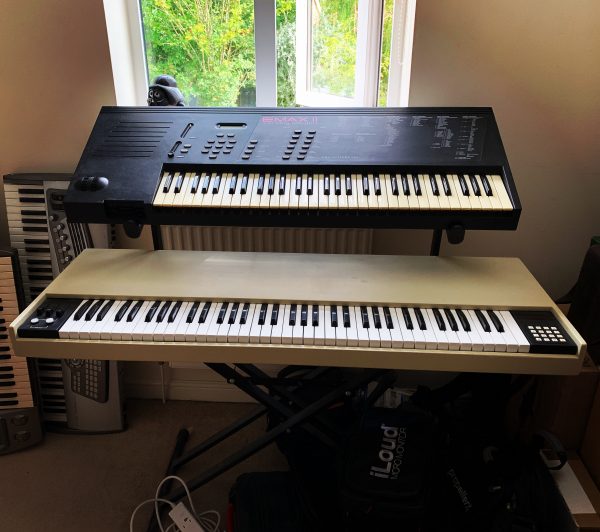
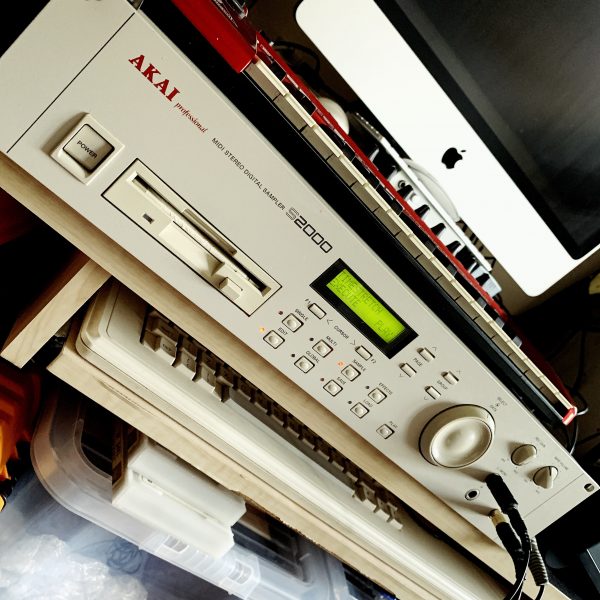
Shortly after ‘Synthesized’, I was contacted by one of the founders of Sound On Sound magazine, an esteemed industry tome that has being at the top of its game since it launched back in 1985. So I was deeply flattered by the contact and even more gobsmacked when they asked me to present a seminar on the Fairlight at this year’s SynthFest U.K. in Sheffield! I cannot lie and say that I had never thought about doing something like this, so getting such an invitation was almost a dream come true. And then the sudden realisation set in that I would need to actually put something of substance and value together.
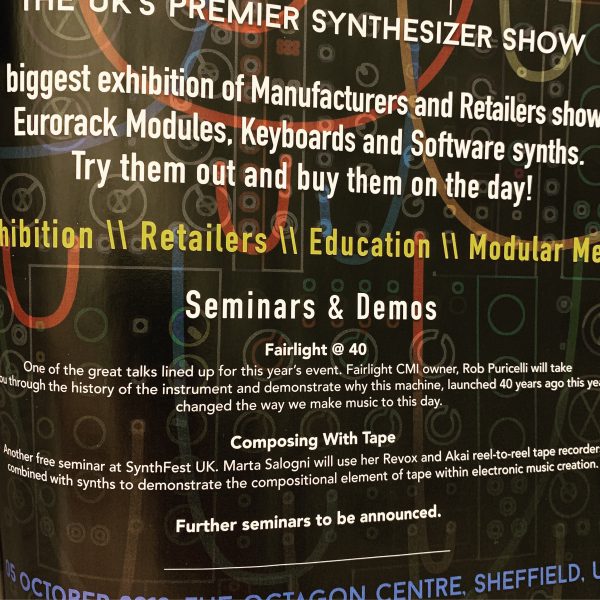
One only needs to read some of my posts here or watch some of my videos on YouTube to know that talking is most definitely NOT an issue for me. But to try and cram in as much interesting info as possible into one hour, keep it relevant, engaging and enlightening and not make a prat out of myself would be a challenge. I spent many hours writing and re-writing scripts, gathering images and documents from my archive, negotiating with Australian museums to get permission to use a handful of images of their exhibits and talking with my peers and mentors to make sure I had the right stuff.
Then, a month or so later, Sound On Sound got back in touch and asked what I thought about the idea of having a guest on stage to interview. I said that it would be very interesting indeed. So imagine my amazement when they told me that they’d managed to secure the services of legendary British producer, Steve Levine! I was beyond stunned and couldn’t quite believe what was happening. This also meant that I had to trim my content in half to make room for a worthy grilling and so back to the drawing board I went. It was a challenge, but definitely worth it.
Slap bang in the middle of my preparations, I had my bi/tri-annual visit from my Fairlight mentor, Peter Wielk. Just a flying visit this time, but enough to get some bits done, parts exchanged and polish off a couple of bottles of red wine!
And so, in early October, I got to go to my favourite Synth show, talk about my favourite synthesizer to, quite literally, a full house of 300-odd people (I heard tell that there were long queues that led back to the main show hall!), some of whom were industry luminaries and for the rest of the day, I was inundated with well-wishers and so many words of thanks and interest. It was staggering and humbling in equal measure. I had already committed to my friends at IK Multimedia to work their stand, demonstrating the UNO Synth and UNO Drum, and felt horribly deficient as I was constantly being approached by people who wanted to talk about the Fairlight! And a good number of these people were industry legends whose desire to single me out for a chat was incredibly mind-blowing!
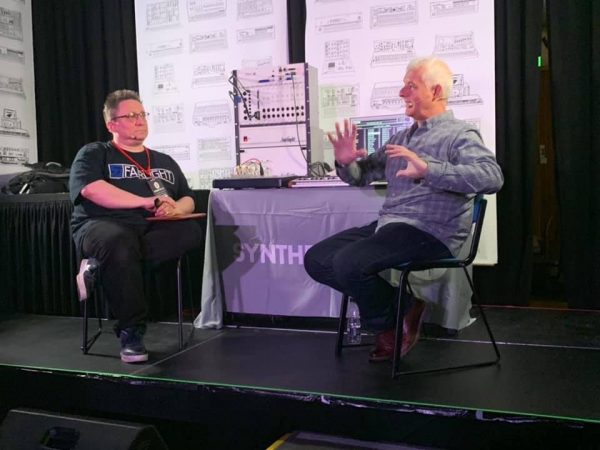
After that experience, I genuinely thought that I’d be scuttling back off to the wilds of East Anglia and putting my synth feet up until the new year. Oh, how wrong was I! Very soon after, I got another call from SOS who told me that Steve Levine was really impressed with what I did and that he had suggested some further collaborations in 2020. I can’t, at this moment, say exactly what those collaborations will be, but watch this space because they are shaping up to be very exciting.
And the SOS calls just kept coming! Numerous introductions were being made and plans being set. But there was more fallout from SynthFest to come! Immediately after the seminar had finished, I was approached by Annie Jamieson, Curator of Sound Technologies at the Science & Media Museum in Bradford. She told me they had a Series III CMI and asked a number of questions around recovering data from disks and data cassettes. She also mentioned an upcoming workshop in November and said she would be delighted if I could make it. Well, as it turned out, the event was being run in conjunction with Edinburgh Napier University and hosted by Annie and a gentleman by the name of Paul Harkins. Paul published his first book this year, entitled “Digital Sampling: The Design & Use of Music Technologies“. A fellow Fairlight user had brought this to my attention and I had already begun conversing with Paul via email, so a trip to Bradford was well and truly on!
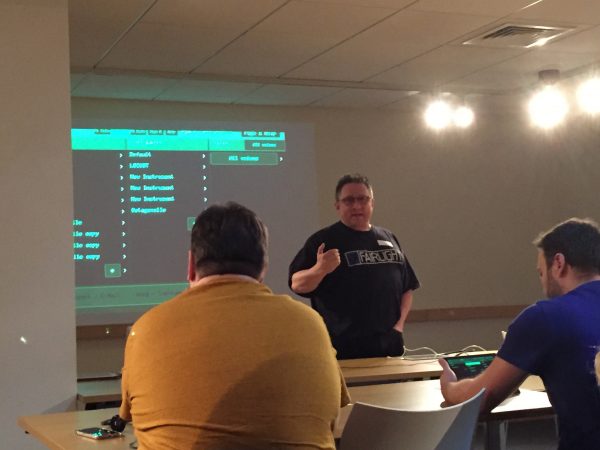
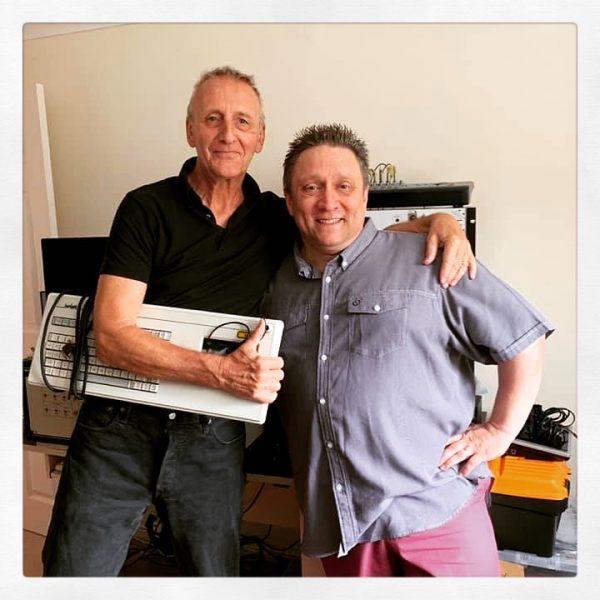
As the date approached, Paul invited me to take part in the presentation, and possibly demonstrate the Peter Vogel Instruments CMI iOS app so that attendees could go off and create samples and compositions from them. Paul also informed me that Robin Scott, legendary musician and the man who donated his CMI to the museum, would also be there! Things could not get any more exciting!
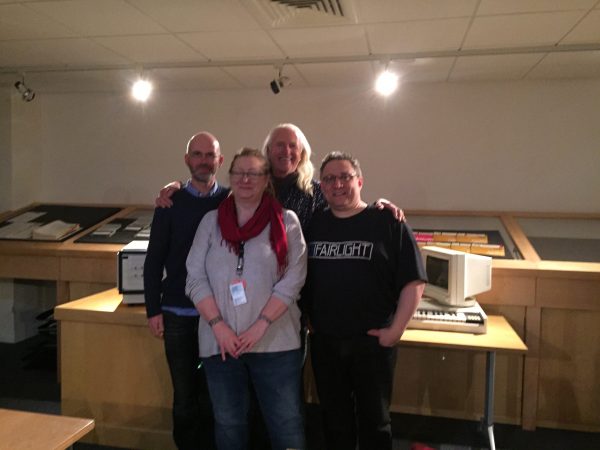
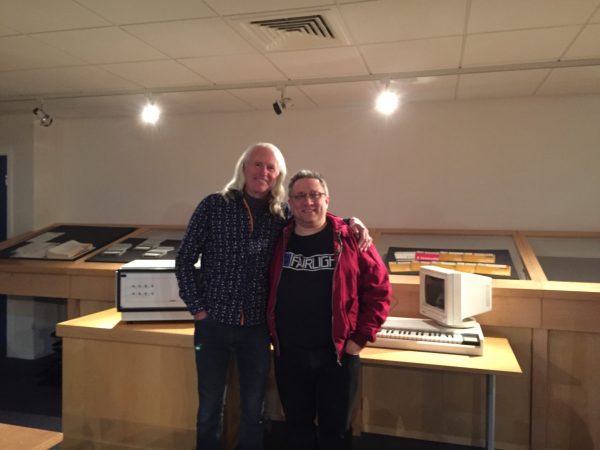
After a long drive, we spent the afternoon talking all things Fairlight with a group of attendees who loved every second of it, and I got to talk with a musical hero of mine and forge a new friendship that will, we hope, bear new fruits in the new year!
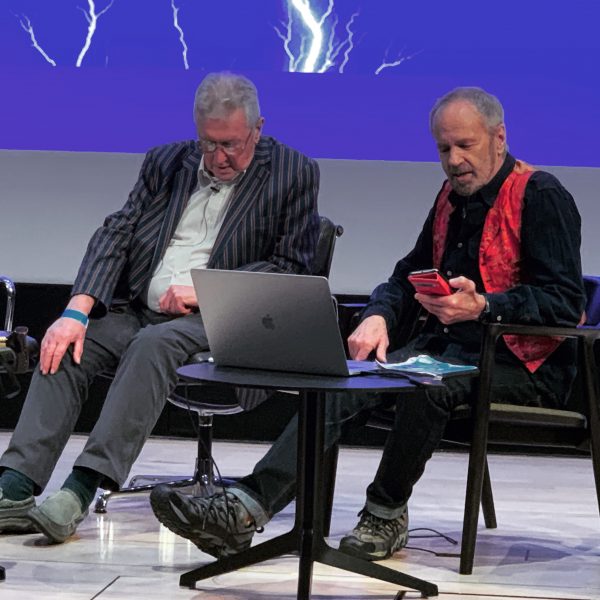
They say good things come in threes and I would’ve laughed in your face if you had told me what would happen next. Yet another call from SOS yielded an invitation to an event they were sponsoring at the British Library in London as part of Delia Derbyshire Day. A series of workshops, followed by a panel discussion and live performance was on the cards, but the best bit by far was an invitation to visit British electronic music pioneer, and one third of seminal electronic music act White Noise, David Vorhaus at his home the next day! David, along with fellow White Noise member, and former BBC Radiophonic Workshop manager, Brian Hodgson were guests at the British Library event, along with current Radiophonic Workshop live act member, Mark Ayres. That evening, I found myself sitting around a table with these three brilliant men, talking sampling, tape loops and all sorts. What was left of my mind was well and truly blown.
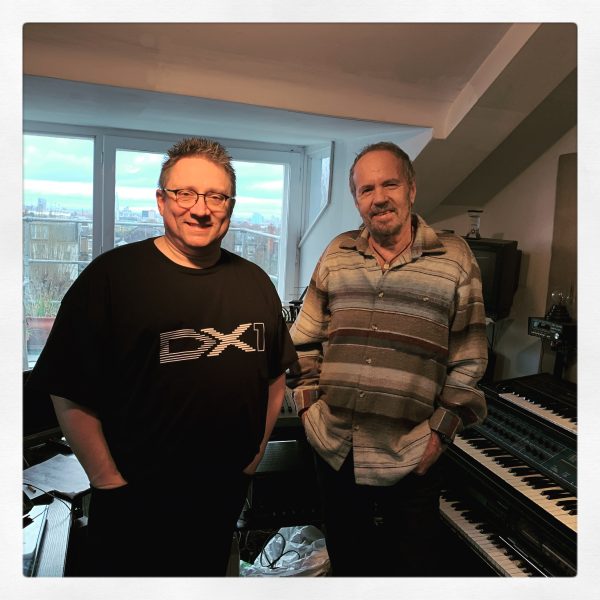
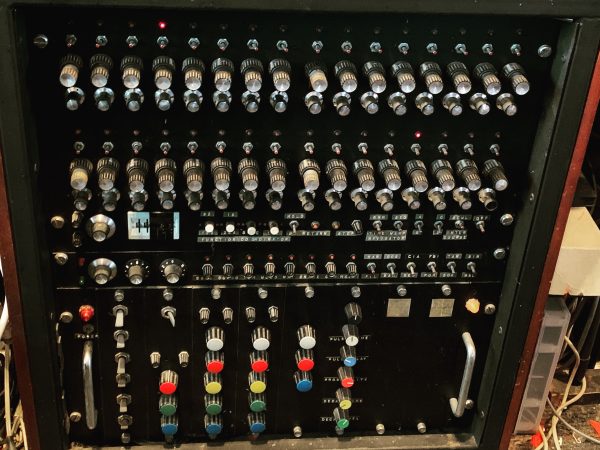
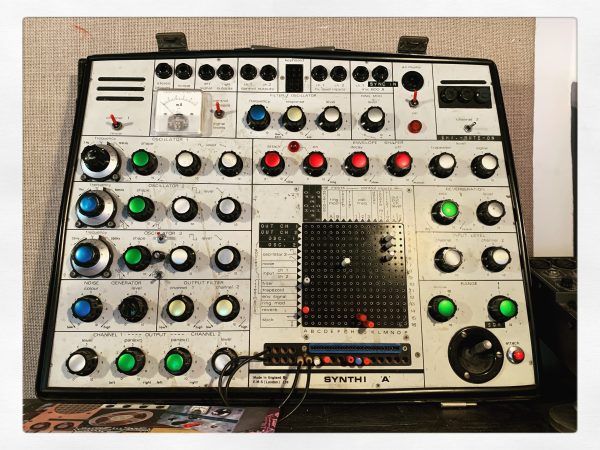
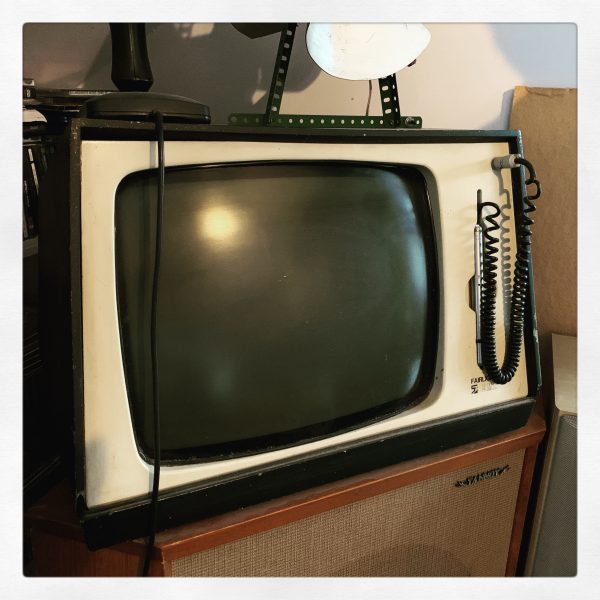
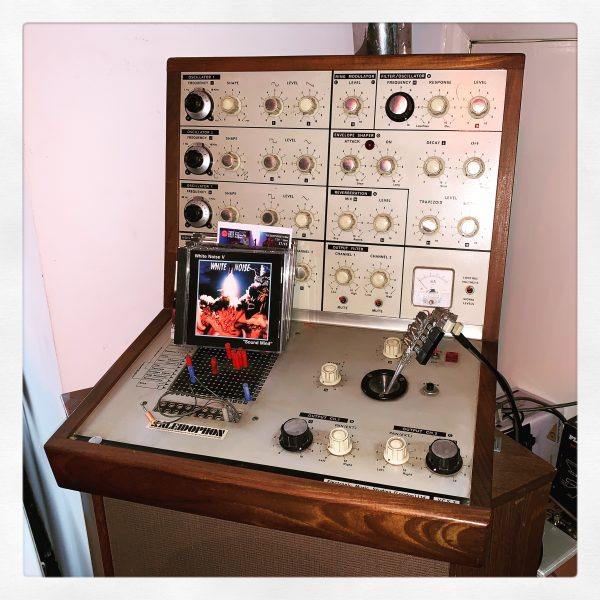
The next day, my colleague from SOS and I took a tube up to North London and spent a brilliant few hours with David in his home and recording studio where I got to see David’s Series I CMI, the very first one to arrive in the U.K., as well as his legendary Kaleidophon, M.A.N.I.A.C. sequencer and other classic pieces of equipment such as his VCS3, PPG Wave 2.2 and Synthi A. And if you’re into your Fairlight lore as much as I am, you won’t need reminding that David is single-handedly responsible for the famous (or infamous) Orch2 (aka Orch5) stab, derived from Stravinsky’s Firebird Suite. Very soon, I hope to be able to recount the tale in full. But as with many of these collaborations, mum’s the word for now.
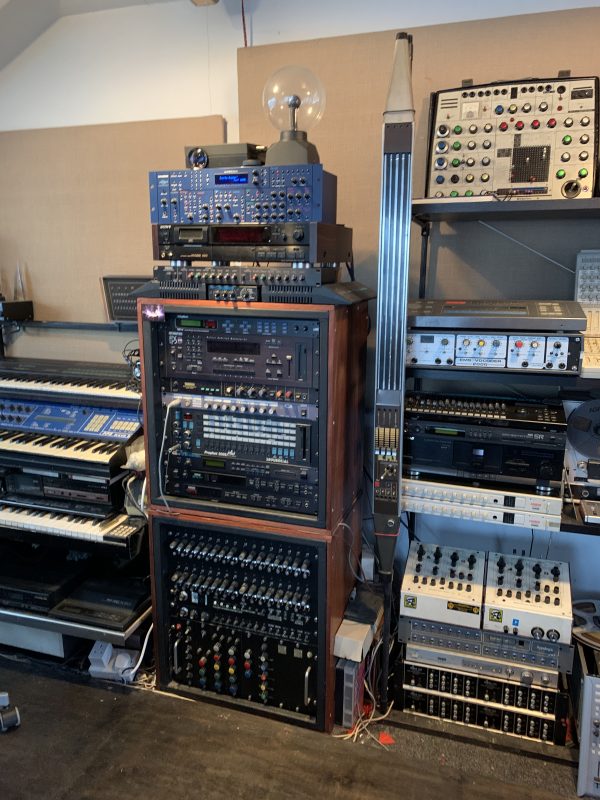
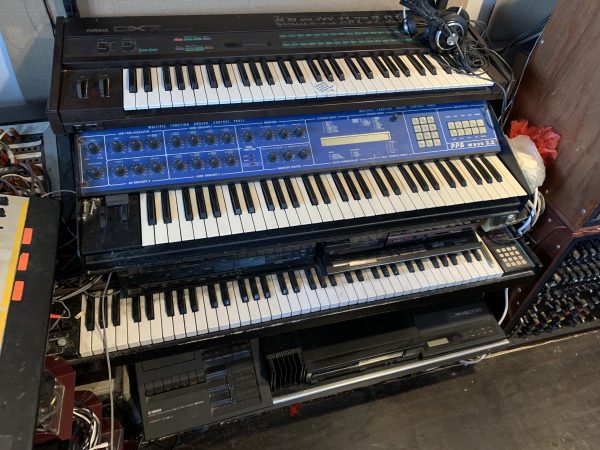
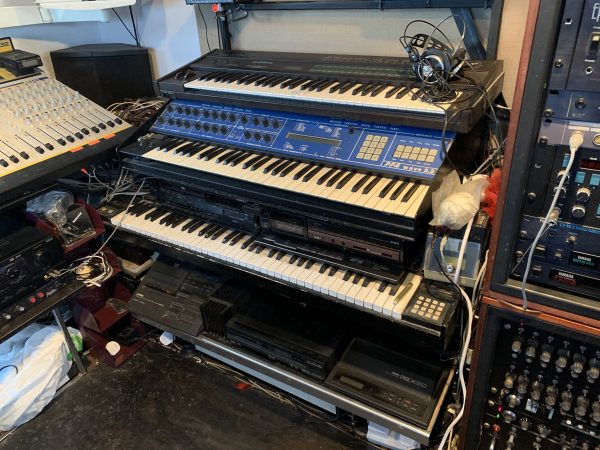
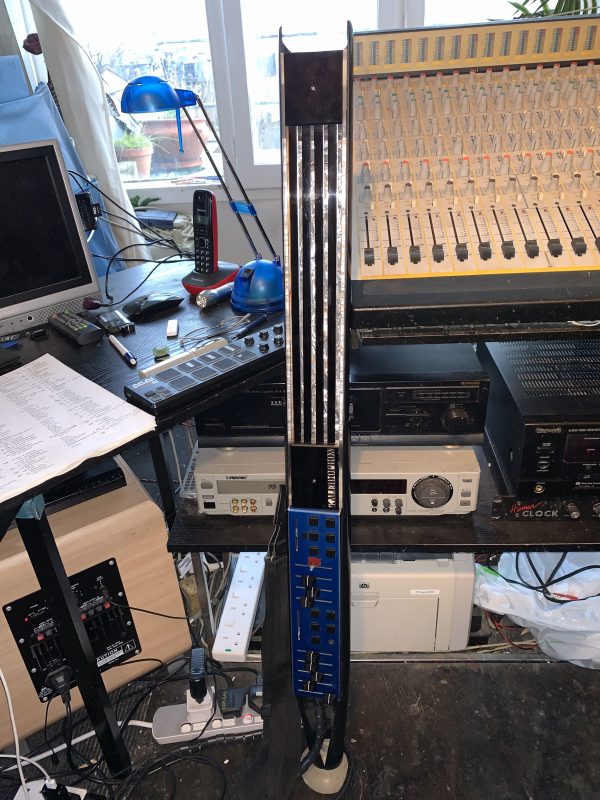
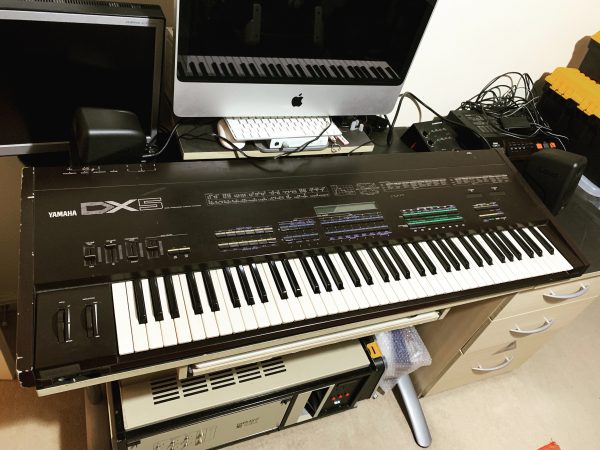
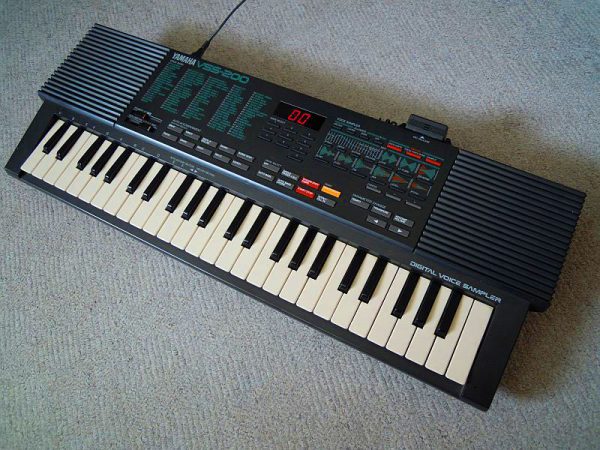
And finally, somewhere in between SynthFest and the trip to Bradford, I was made aware of the availability of a Yamaha DX5 near Liverpool. I truly thought it would be well out of my price range, but after talking with the owner, I got an amazing deal and the beast came home with me to take pride of place in my studio. Around the same time, I found a Yamaha VSS200 for sale at just £25 and I just had to grab it because the VSS200 was the first sampler and dedicated keyboard that I ever bought with my own money! Until then, I had relied on using my Commodore 64 and the FM expander!
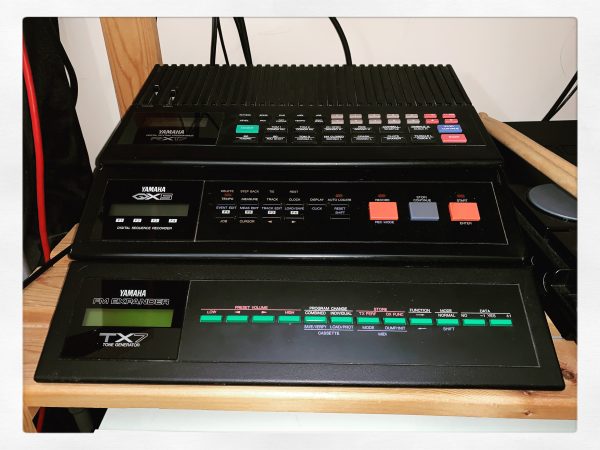
But the FM thing did not stop there. Last year, an acquaintance of mine offered me his old Yamaha TX7 module, to which I gratefully accepted and after a protracted effort to locate it, he eventually sent it to me just after SynthFest. It worked perfectly and after I fitted a new backlit screen and the final OS EPROM chip, I now had two 6 Operator FM synths in my studio at last! And, as if bitten by some bug, I then sought out a couple of other items from Yamaha’s legendary ‘X’ range of tools, namely a QX5 sequencer and an RX17 drum machine, both of with sit nicely atop the TX7 to form a very 80s tower of musical power!
All of that FM nostalgia got me thinking, towards December of this year, about the whole Yamaha ‘X’ range and the numerous components, their design and impact on the musical world at that time. So much so that next year, I very much hope to bring you a well-documented history of these tools, firmly based around not just the influential sounds, but also the striking design that permeated every element. But more of that to come!
And to top it all off, I’ve guested on both SonicState and GEOSynth podcasts in recent weeks, and was even invited to contribute to and appear in Behringer’s 30th Birthday video!
I never thought that as 2019 started, and that Behringer MS-101 arrived on my doorstep, that the following 12 months would turn out like they did. I genuinely thought that bagging that very desirable bit of kit would be the pinnacle of my synth year and yet, writing all of the above has just blown my mind yet again and none of it seems real and I’m expecting to wake up any minute now to realise it was all in my head. I do hope not, though!
So that’s the story of my 2019. I have to thank each and every one of you who read my articles, watch my videos, sent me messages and interacted with me in person and/or online. Your support, encouragement and enthusiasm for all that I do keeps me going, especially at times when I feel I might be better off just giving it all up. Thank you all so very much indeed.
Unless something massive comes up in the next week, that’s me signing off for the year and I cannot wait to share with you all that I have planned for 2020.
Merry Xmas, one and all, and a very Happy New Year!


Leave a Reply