


My DX Rediscovery
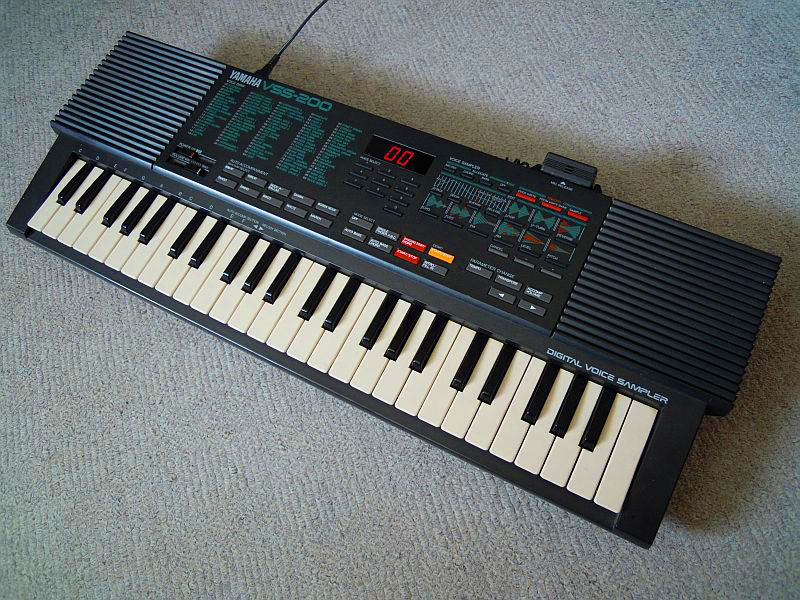
Since first seeing and hearing the DX7 in ’83, I have always hankered after one. By the time I could think about buying one, technology had advanced somewhat and FM was then “old tech” and so I spent what funds I had on more modern equipment of the day. However, that didn’t stop me from exploring FM, be it through my FM Sound Expander on my Commodore 64 or via my first sampler, a Yamaha VSS-200, which aside from its very limited sampling capabilities, also featured a 2-Op FM chipset often found on the cheaper models of their Portasound range. But a DX7 these were not.

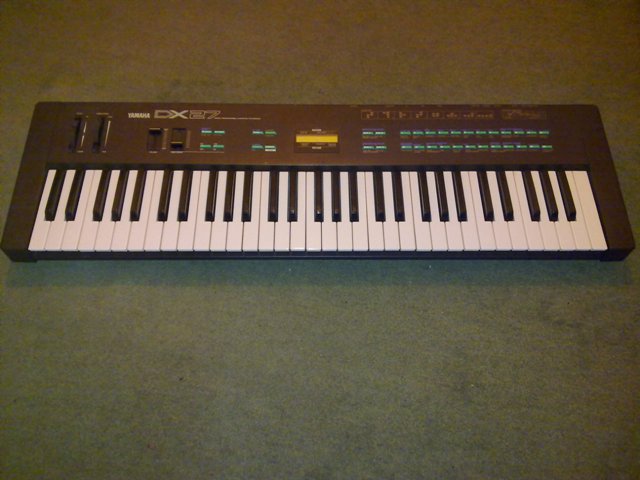
Some years later, a friend of mine told me he was throwing a couple of dead synths in the skip. I intervened and took them both off his hands. One was a Godwin String Concert synth (now owned by Gordon Reid and features in an expansion pack for GForce Software’s VSM plugin) and the other was a DX27. I took the DX27 to my local synth repair place and they found a burnt out PSU board. A couple of days and £126 later, I had a fully functional DX27! And as nice as it was, being 4-Op, it lacked the real oomph of the 6-Op DX7 and it mostly got used for “that” bass patch and little else. I eventually (and reluctantly) sold it, along with a CS1x, RM1x and SU-10, to fund the acquisition of a new Alesis DM10 Pro eDrum kit. As my luck would have it, two days before I was to buy said drum kit, my car at the time failed its MOT and required, somewhat predictably, repairs that severely depleted what I had in my savings account.
After that, and until fairly recently, I pretty much cut back on gear acquisition, eventually getting my Alesis drums a few years ago. But the itch was still there and needed to be scratched. Last year, an acquaintance of mine got in touch after some arbitrary online discussion about FM/DX synths and told me he had a TX7 module kicking about somewhere and asked if I would like it. I immediately jumped at the chance and asked him how much. He said I could have it for nothing as he never used it and he wasn’t even sure what kind of condition it was in. I was, as you can imagine, very excited by this prospect! However, it took almost a year for him to locate the module and send it to me but, true to his word, he got it to me and didn’t even allow me to compensate him for the postage!

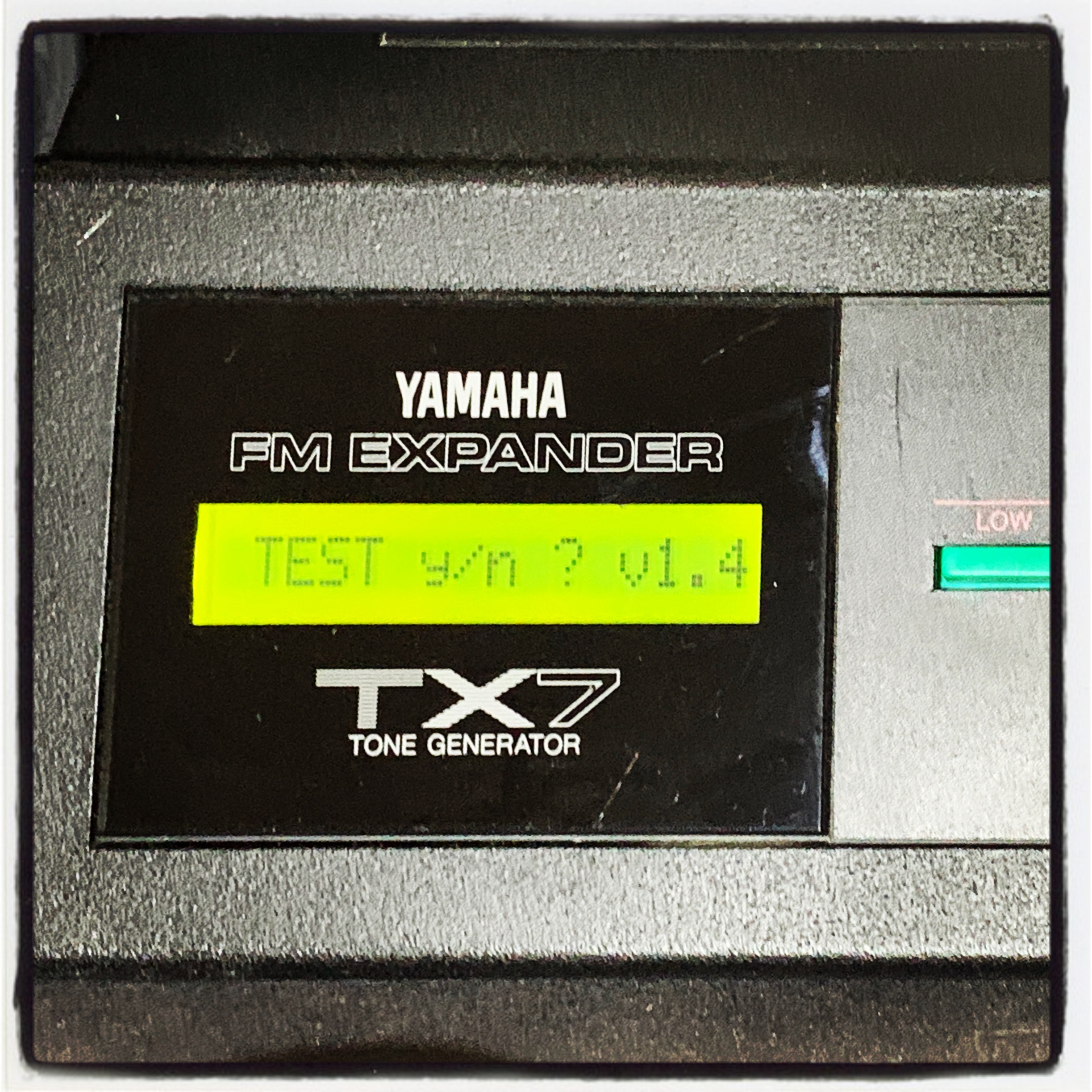
My heart sank a little when I unboxed it as the mains plug had taken a nasty knock, ending up shattered in the packaging and leaving some nasty scratches on the underside of the unit. So I located a new plug and swapped it over. I plugged it in, switched it on and…. nothing. I began to wonder if I was cursed or some such until I thought about changing the fuse in the plug. It had been sitting in one of my many draws of cables and components and I thought that maybe I had rescued it from something that may have blown the fuse. I frantically searched for a suitable fuse, swapped it over and lo and behold, we had life!! I was greeted with the TX7 welcome message and I was soon playing those classic DX sounds through those lovely 12bit DACs and feeling the nostalgia wash over me!
I proceeded to restore the unit’s contents to factory settings, sending across the correct factory patches using the rather brilliant DEXED application. I was amazed to see that the internal battery was still pushing out 3.3V after 34 years! After a bit of research, I discovered that the OS EPROM was not the final version (1.4), so I sought one out on eBay, as one does these days, and also sourced a new, backlit LCD screen from the same seller, who I can recommend very highly. Installation was a breeze and I have had much fun with this thing ever since!
But now the bug had truly bitten.
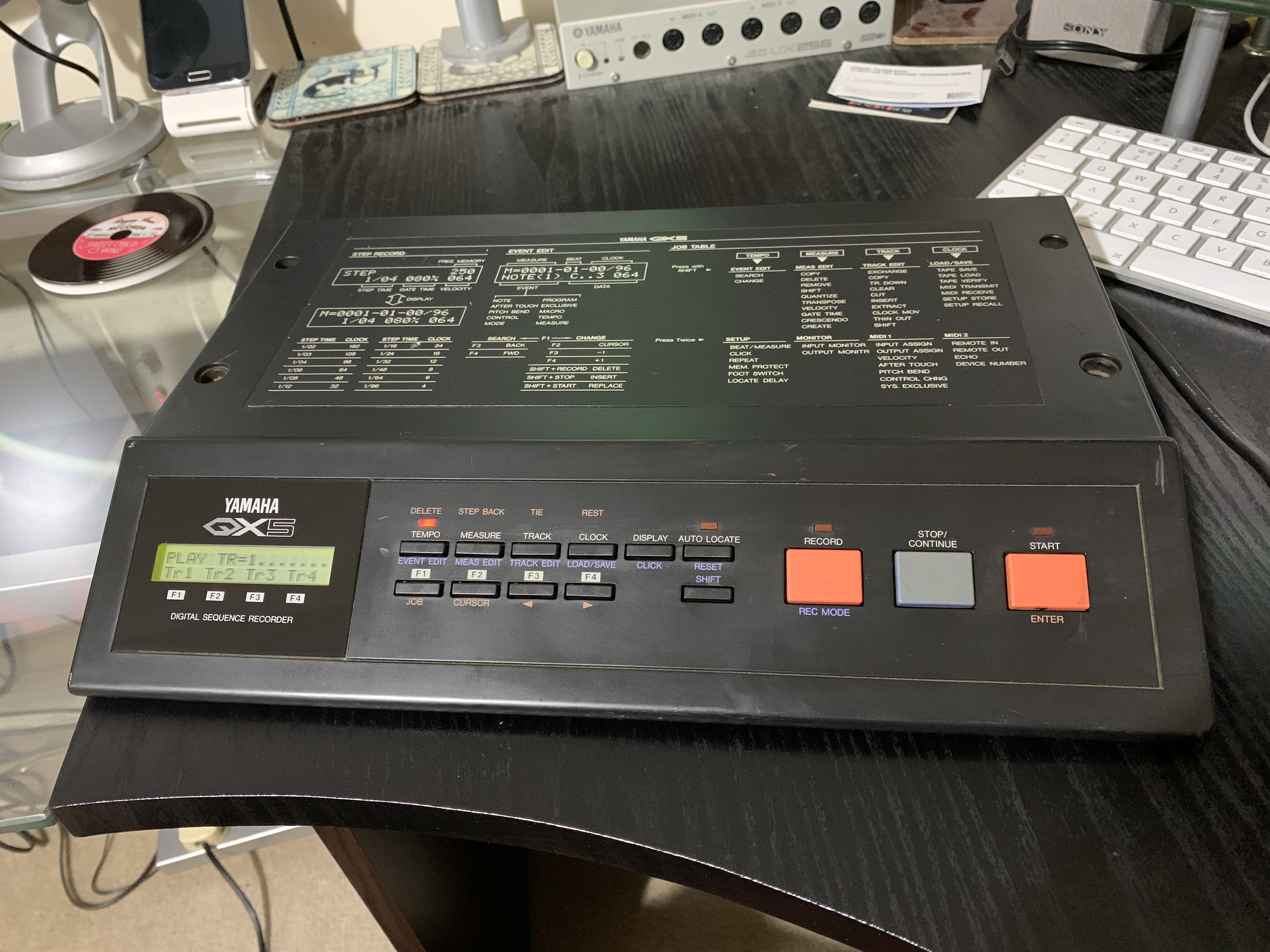
I recalled that, back in the day, there were numerous modules built in the same style as the TX7, such as some of the QX sequencers and RX drum machines and so I searched on eBay and found a QX5 being sold for a more than reasonable price. The QX5 is to the QX3 what the DX5 is to the DX1, in that it has pretty much the same functionality and power, but with enough trimmed away to make the price more palatable for a larger audience. It arrived and was in perfect working order. Not only that, it looked pretty neat sat atop the TX7 as intended! And now, I am currently looking for an RX drum machine to finish the set, so to speak. I am hoping that in the next few days, I will land one.
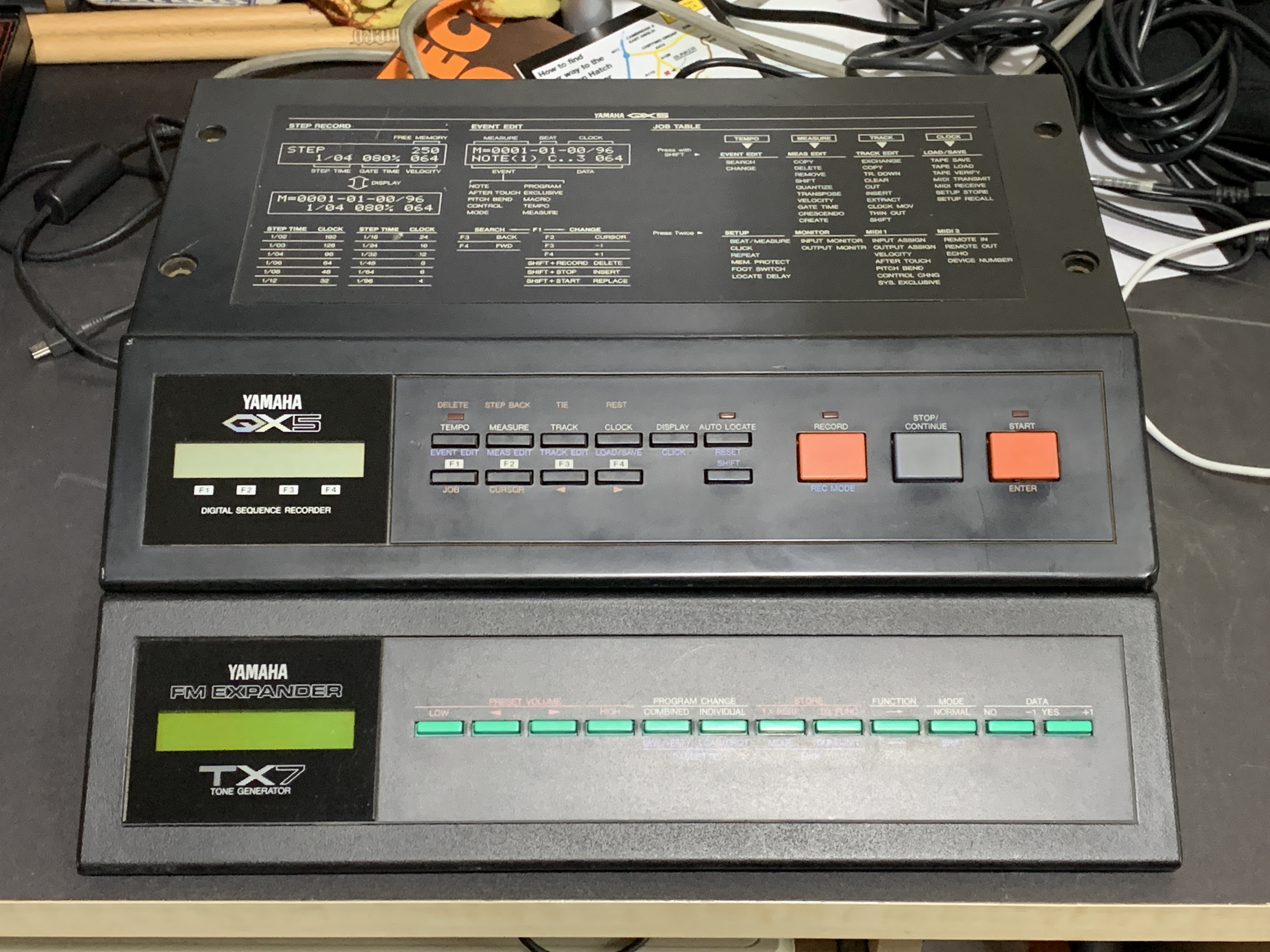
UPDATE!!
I was able to track down an RX17 drum machine to complete my sloping Tower of ‘X’ Power!
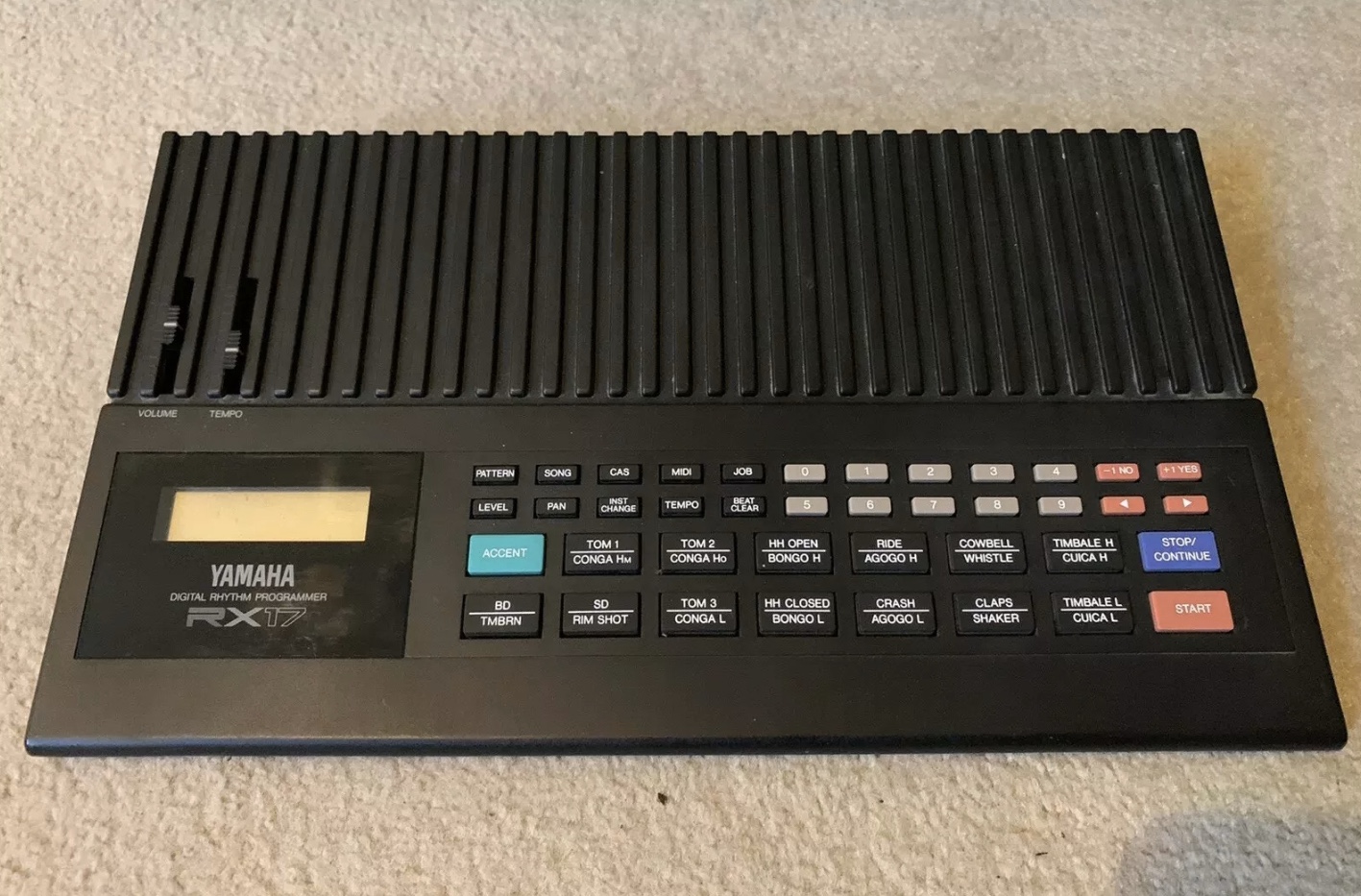

And you’d think it might stop there! Oh no. Not by a long stretch.
Over the years, despite my only owning a DX27, I was always trying to learn about the DX range of synths and their associated tools and peripherals. One time, I was in a local Cash Converters (a U.K. based modern take on a pawn shop) and saw a DX9. The price tag was favourable and I very nearly bought it straight away. And this was one of many occasions that having the luxury of mobile internet access saved me wasting my hard earned cash. A quick Google enlightened me and warned me off buying probably the worst DX of the bunch! From that moment, I made sure I learned my stuff about each of the instruments and it wasn’t long before I realised that, despite my decades long yearning for a DX7, what I really wanted was the DX5.
The DX5 sat between the DX7, the hugely successful and most commercial of the range, and the DX1, the mighty FM behemoth with its fully weighted, wooden keyboard with polyphonic aftertouch, Brazilian wood casing, tons of really useful LED displays and more direct access function buttons than the DX7. It housed two DX7 engines that could be split across the keyboard or layered on top of each other thus giving a far more rich and complex sound.
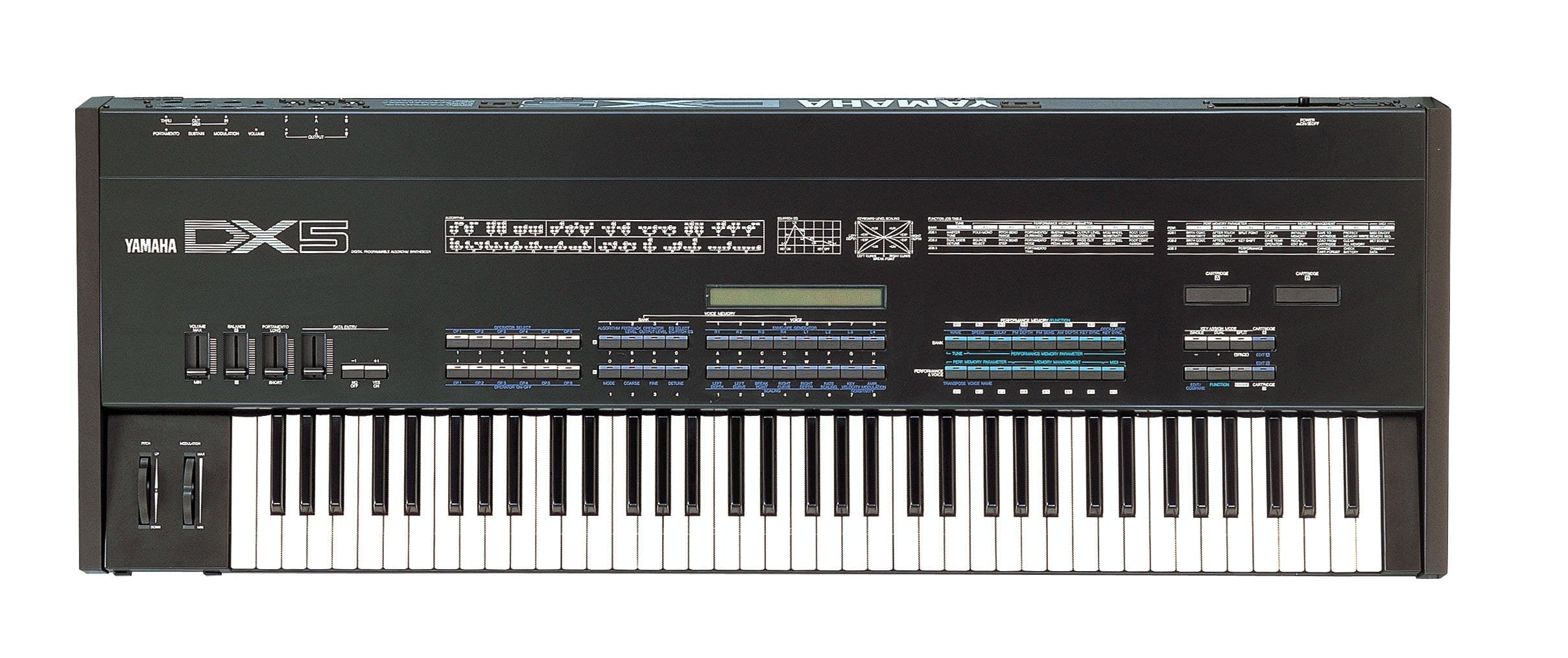
The DX5 was essentially a DX1 minus that keyboard (and, sadly, the PolyAT), most of the wood casing (the DX5 has wood cheeks painted in DX brown) and all of those extra, informative LEDs. But internally, it had the same engines and sold for about $12,500 less! (RRP was $3495). There were only 140 DX1s ever made, and the DX5 was not made or sold in great numbers either. It was actually more cost effective to buy a DX7 and a TX7 to get the same twin-engine sound, or even just two DX7’s. Many studios and live rigs went all out and just bought a TX816 which was a rack-mount unit that could house up to eight TF1’s at a time. A TF1 was a DX7 engine in a unit that didn’t look too dissimilar to a Eurorack module. This allowed you to effectively run 8x DX7’s with all the polyphony, multi-timbrality and individual outputs that that allowed, in just a mere 4U rack-mount unit. All those TF1s could be controlled and programmed from a regular DX7. Someone once told me that I hadn’t heard a classic DX electric piano until I had heard the TX816 unison electric piano. You can stack 8 electric piano sounds, one in each TF1, pan and detune each one in slightly different directions and you then end up with an FM electric piano that would make even Whitney Houston weep! Try it for yourself in DEXED 🙂
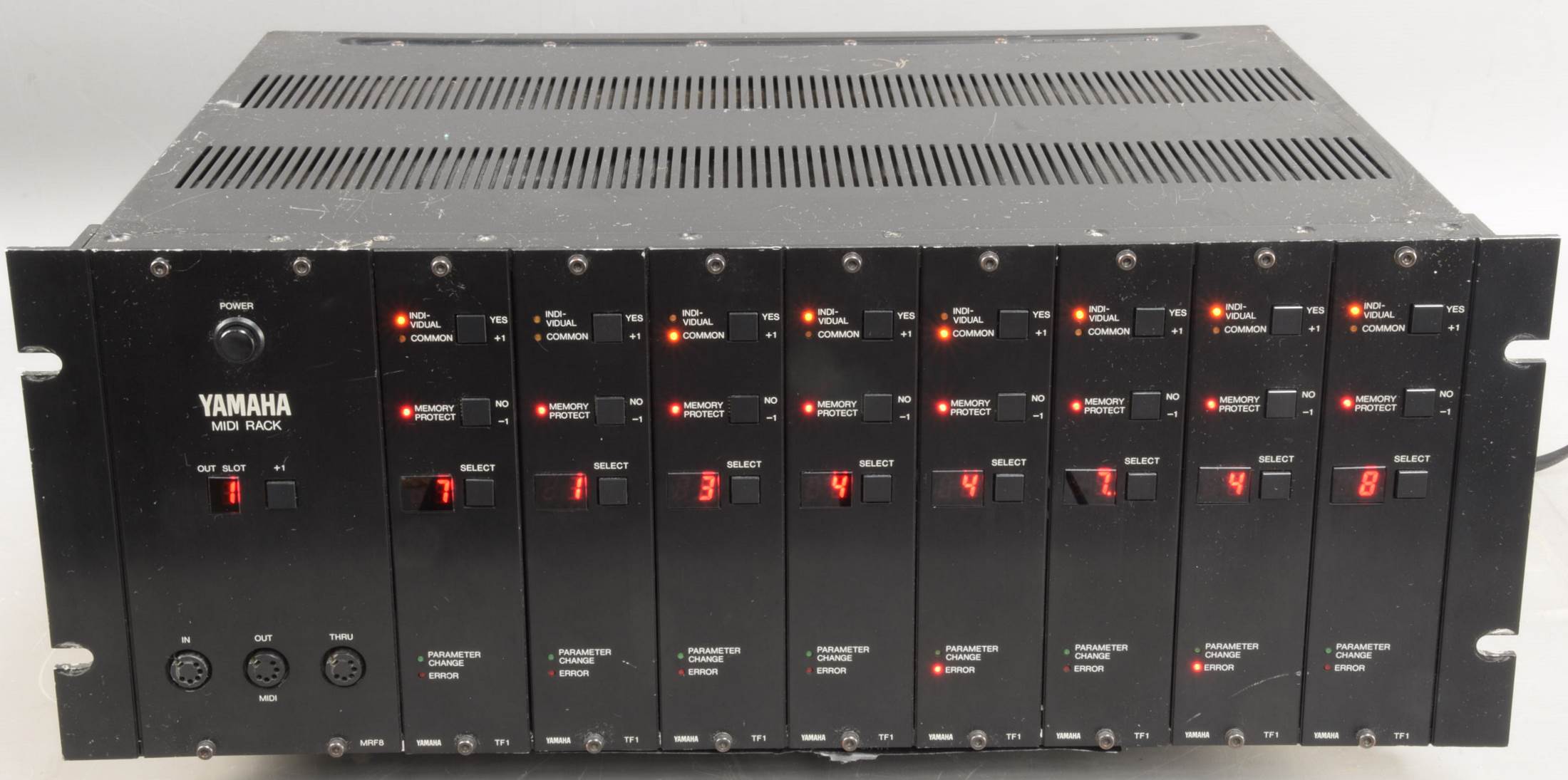
But as lovely as the TX816 is, there is something physically alluring about the brown/green lustre and design of a DX keyboard. So I made it my mission that one day, I would try and own a DX5 and if that was unreachable, then a DX7 would do.
So imagine my joy when, via a fairly new Facebook synth community group, I was offered a DX5 for an extremely reasonable price! After a few online chats with the seller, I travelled up and across the country on a 500 mile round trip and sealed the deal, coming away with a fully operational DX5 (with bulletproof Bulldog flight case), 2x ROM cartridges, 1x RAM cartridge and, quite remarkably, a BC-1 Breath Controller that had never been used since the synth was purchased new in the mid-80s!
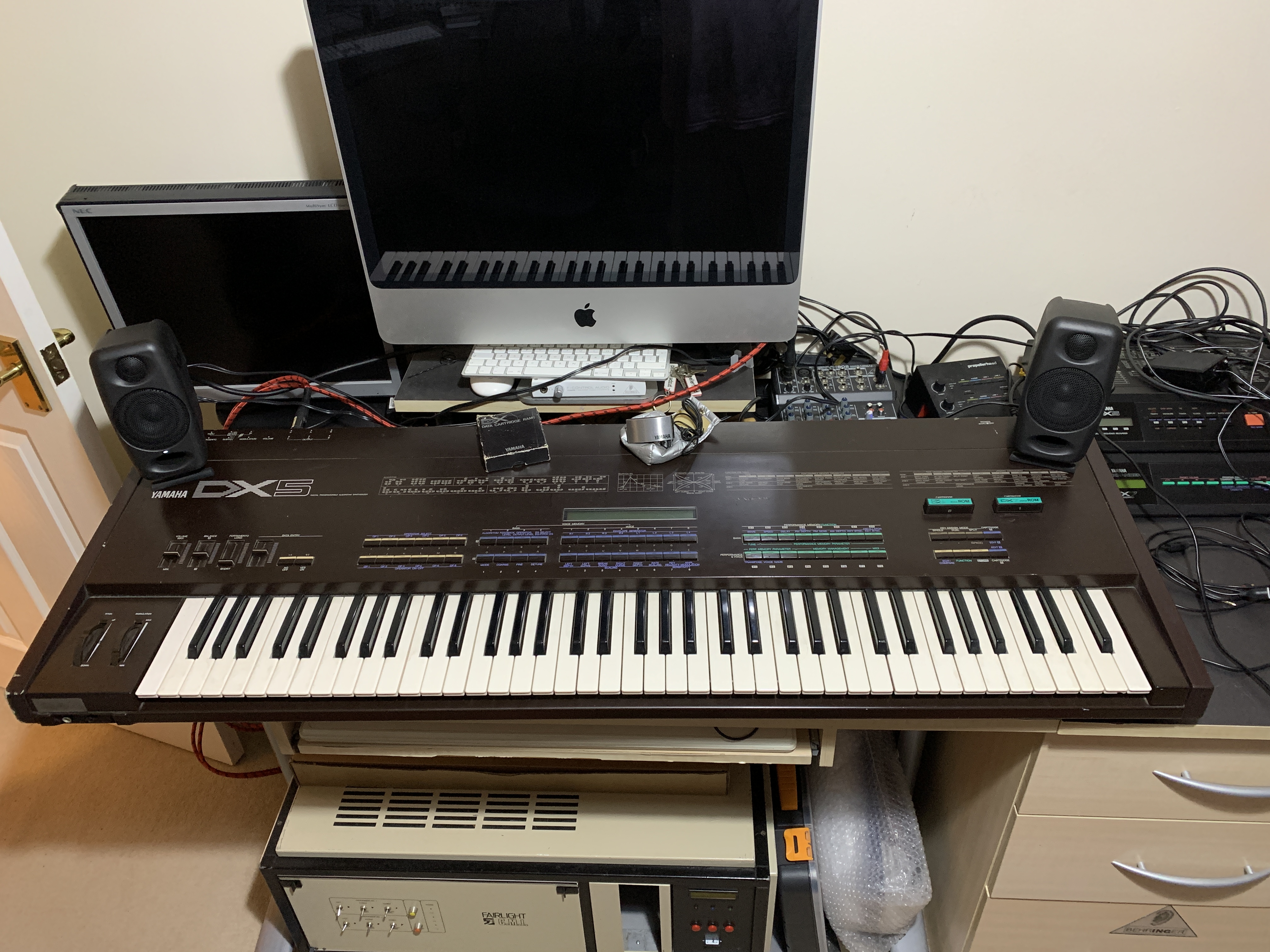
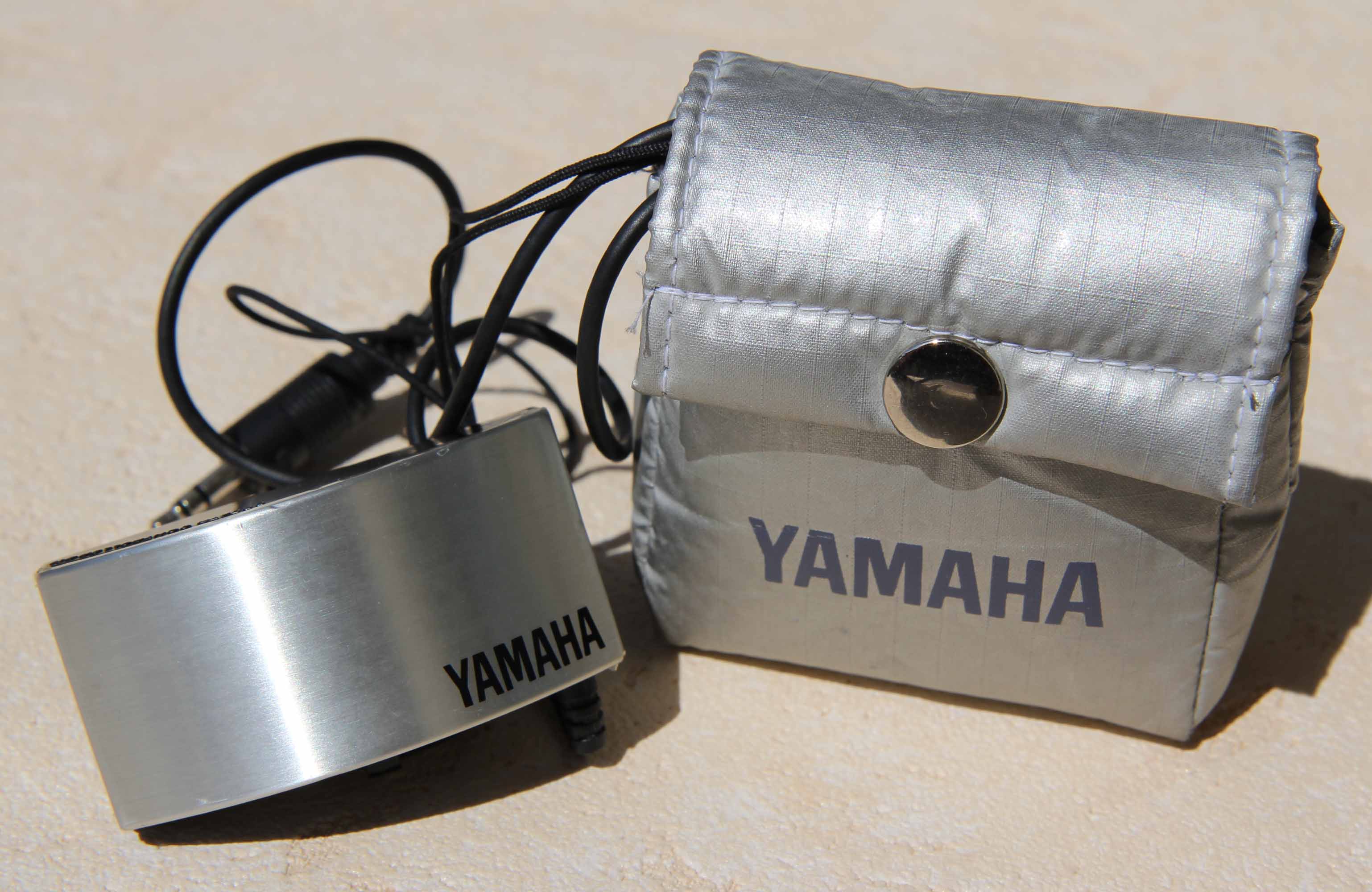
It has a few minor battle scars, nothing that you wouldn’t expect from a 35 year old synth, but it is completely functional save for one channel on the headphone socket being out of action! To say I am over the moon would be an understatement. It is quite a heady feeling knowing that I have this beast in my possession now. There will be some TLC applied to clean up and service the unit so that it is the kind of condition that will see it last at least another 35 years. But now the real learning curve begins!
UPDATE: 17/12/23
Having just been reminded of this post which is now over four years old, I thought it might be worth updating it with all the stuff that has happened since!
So the biggest news, and one that may have been obvious from some of the background shots on the site is the acquisition of a DX1! When it arrived, it was suffering from some serious sonic issues. The synth was not playing any notes and emitting a very high pitched squeal! After checking all the boards (remarkably, by using another DX1!) we isolated the issue to the power supply. A very good friend of mine took it away and rebuilt it. Sounds simple enough, but every component that showed up as failed and then replaced revealed yet another faulty component. So it’s had an extensive rebuild and chances are, at some point, a new, more modern PSU will have to be sourced. But for now, all is well!
The next acquisition was a pristine TX816! This wasn’t cheap but it had been incredibly well looked after and had recently been serviced with a brand new, hand built PSU. The original PSUs are notorious for being flaky and somewhat noisy. But this new one is as quiet as a church mouse and all eight TF1 boards have been serviced and tested by a professional.
In the space of what must have been less than a year, I also acquired a QX1, QX3, QX7, RX11, RX5, DX7 Mk.I, DX7-IIFD, DX11, TX802, TX81Z, FB-01, SY22, FS1R and various other Yamaha items from that era!
Furthermore, I’ve been able to take some of this gear out and about to shows and I’ve even given lectures and seminars on the subject…
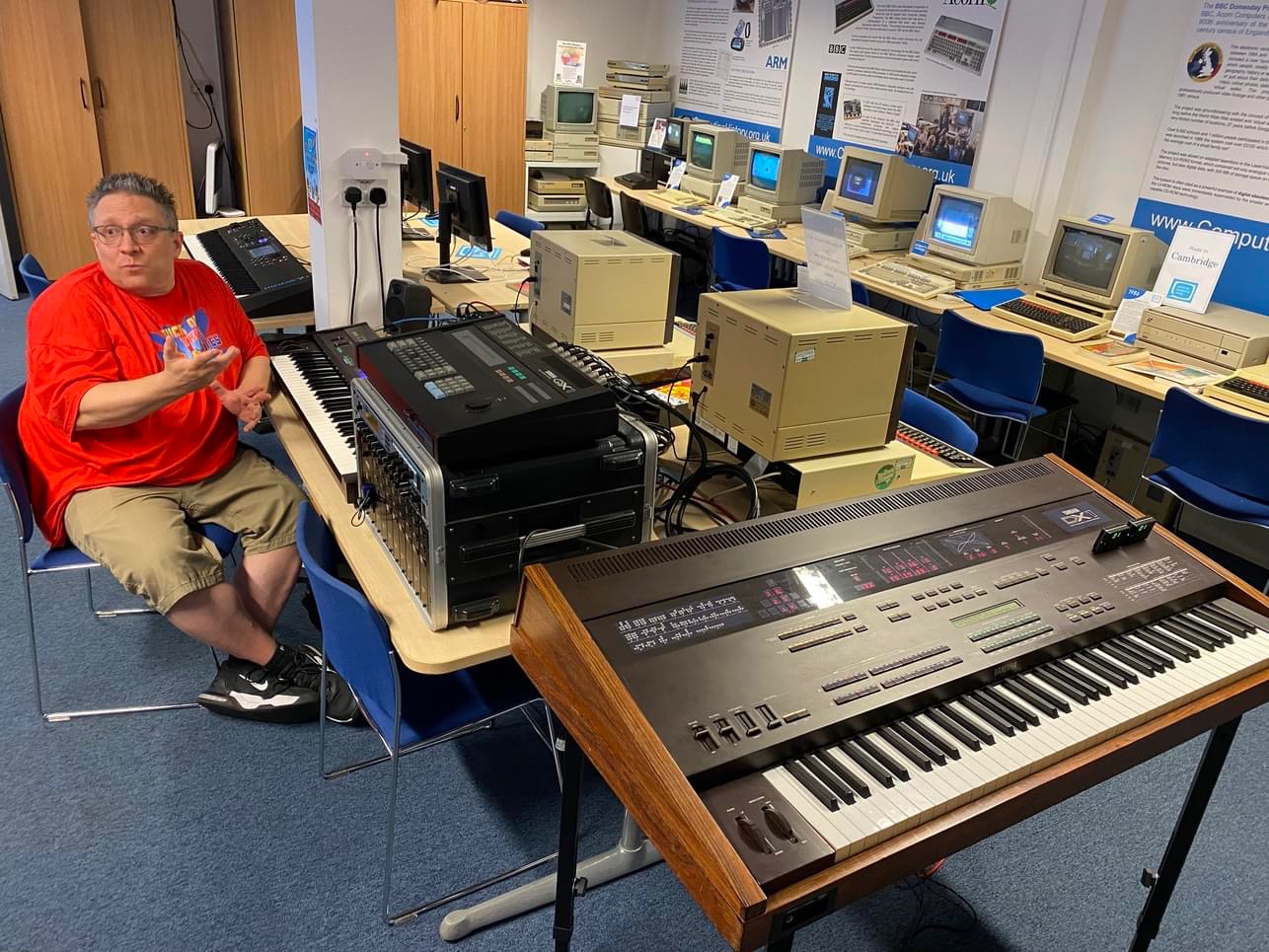
There’s plenty more to come, I’m sure, not least the possibility of acquiring the TX816 used on Scritti Politti’s ‘Provision’ album!


I really enjoyed reading your journey with Yamaha I must say! I went all the way when I discovered Yamaha gear and ended up with a DX1 keyboard QX1/TX816 module CX5 computer module. I am fortunate that I still have this stuff but the QX1 needs a USB conversion to bring it up to date. Dreams can come true.Still working after all these years!
Thanks!
I’ve just added an update, prompted by your reply 😉